How much do managed IT services cost in 2026?
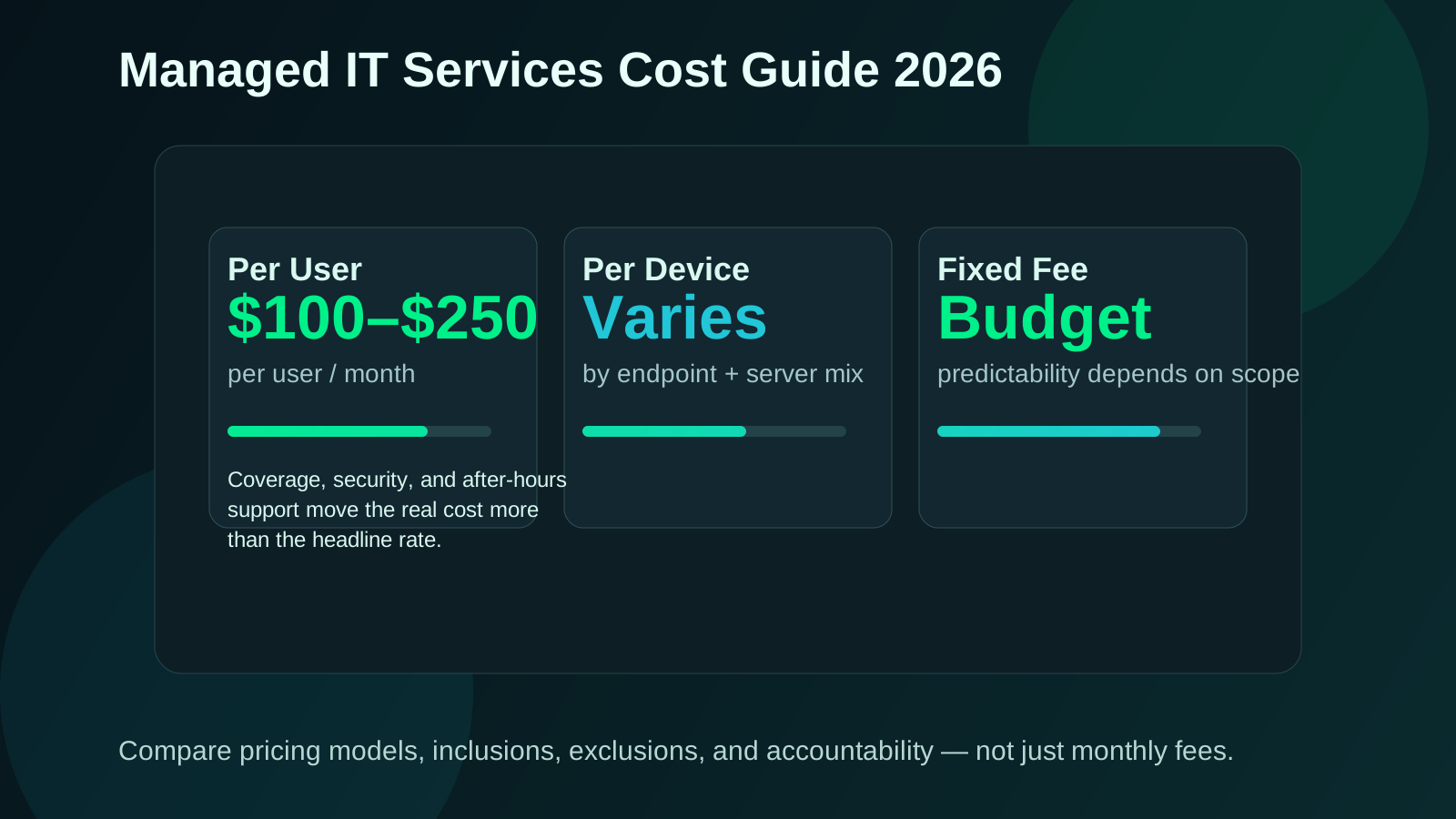
Managed IT services usually cost businesses anywhere from roughly $100 to $250 per user per month in 2026, or a comparable monthly rate per device or per environment, depending on coverage, security requirements, support hours, and the complexity of the environment. The real price depends less on a headline rate and more on what the provider is actually responsible for, what is excluded, and how much operational discipline the business expects from the relationship.123
That distinction matters because buyers often compare MSP proposals as if they are interchangeable. They usually are not. One provider may include help desk, endpoint management, patching, backup oversight, Microsoft 365 administration, vendor coordination, and quarterly roadmap reviews. Another may quote a lower rate but carve out after-hours work, security tooling, onboarding cleanup, server support, network devices, project labor, or compliance support.24
In our experience, the more useful question is not just how much do managed IT services cost? It is what operating model are we paying for, and will it actually improve uptime, security, and accountability? That is where pricing decisions get more practical.
At Datapath, we recommend treating managed IT pricing like any other risk-and-operations decision: compare scope, response expectations, governance, and long-term fit before you compare monthly fees.
What pricing models do managed IT providers usually use?
Most MSPs use one of four basic pricing models: per-user, per-device, tiered bundled plans, or flat/fixed-fee agreements. The right fit depends on how your business works, how standardized your environment is, and whether you need broad operational ownership or a narrower support contract.125
What is per-user managed IT pricing?
Per-user pricing charges a recurring monthly amount for each supported employee. This model is common because it is easy to forecast and works well when each user typically has a laptop, cloud apps, collaboration tools, identity controls, and a fairly standard support profile.15
Per-user pricing often includes:
- help desk support
- endpoint monitoring and patching
- Microsoft 365 or Google Workspace administration
- basic security stack oversight
- user onboarding and offboarding support
- recurring reporting and service reviews
The main advantage is predictability. If your headcount changes, the bill usually changes with it. The main downside is that the price can look clean while still hiding exclusions for servers, network hardware, after-hours issues, project work, or advanced cybersecurity services.
What is per-device managed IT pricing?
Per-device pricing charges separately for laptops, desktops, servers, firewalls, switches, and other managed assets. This model is often useful when user-to-device ratios vary a lot or when infrastructure complexity matters more than headcount.26
This can work well for environments with:
- shared workstations
- warehouses or clinics with specialized devices
- multi-site infrastructure
- a mix of light-support and high-support systems
- server-heavy or network-heavy operations
The downside is that bills can become harder to interpret if the provider manages a large mix of endpoints, servers, security appliances, and cloud resources under separate line items.
What are tiered or bundled plans?
Some MSPs package services into good / better / best bundles. Those plans might offer a base tier for support and patching, a mid-tier with backup and security tools, and a higher tier with compliance support, strategic planning, or stronger after-hours coverage.34
This approach can simplify buying, but buyers should be careful. Bundles can hide tradeoffs. A higher tier may still exclude project work, security engineering, incident response, cloud migrations, or vendor remediation labor.
What is fixed-fee managed IT pricing?
A fixed-fee or flat-rate agreement charges a consistent monthly amount for a defined scope of services. This often appeals to leadership teams that want budget predictability and fewer surprise invoices.
The catch is simple: fixed-fee pricing only works when scope is clean. If the environment is chaotic, undocumented, heavily customized, or under-secured, the provider may either price in a large risk premium or push a lot of work into out-of-scope buckets. That is why we usually recommend comparing fixed-fee offers against the practical questions in our fixed fee vs. per-user IT pricing guide and our MSP evaluation checklist for 100+ employees.
What actually drives the cost of managed IT services?
Managed IT pricing is usually driven by support complexity, cybersecurity depth, user behavior, infrastructure sprawl, compliance requirements, and service expectations. The monthly fee is really a proxy for how difficult the environment is to run well.
How do user count and environment complexity affect pricing?
More users do not always mean higher support cost per user. Highly standardized environments with modern hardware, strong identity controls, and clean documentation are usually cheaper to support than smaller organizations with aging devices, shared credentials, multiple vendors, and no clear support workflow.24
Important cost drivers include:
| Cost driver | Why it changes price | What buyers should ask |
|---|---|---|
| User count | More users increase ticket volume and admin work | Is pricing truly per user, or are some systems billed separately? |
| Device mix | Servers, firewalls, and specialty endpoints take more effort | Which devices are fully managed versus lightly monitored? |
| Site count | Multi-location operations create network and vendor complexity | Is each location included in the monthly fee? |
| Environment health | Poor documentation and technical debt increase workload | Is remediation included during onboarding or billed separately? |
| Support hours | 24/7 coverage costs more than business-hours support | What happens at 2:00 AM during a high-severity incident? |
| Security/compliance | Regulated environments need stronger controls and reporting | Are compliance support and audit prep included? |
That last column matters a lot. Buyers should force providers to explain coverage in operational terms instead of marketing language.
How does cybersecurity change the price?
Cybersecurity is one of the biggest reasons proposals vary. Some MSPs include only basic endpoint protection and patching. Others include EDR, email protection, identity monitoring, incident coordination, vulnerability review, backup validation, security awareness, and compliance-aligned reporting.37
That means a lower quote may simply reflect a thinner security model. If your business handles regulated data, depends on uptime, or faces customer diligence and cyber insurance pressure, the cheaper proposal can become more expensive later if it leaves major control gaps. Our managed cybersecurity services guide and cybersecurity compliance services guide both show why support and security should not be priced as if they are unrelated.
Does onboarding affect cost?
Yes. Many managed IT agreements separate recurring support fees from onboarding or stabilization work. That first-phase labor may include documentation, tool deployment, tenant cleanup, backup review, asset inventory, admin account cleanup, network discovery, and policy standardization.24
In practical terms, buyers should ask:
- Is onboarding a one-time project fee?
- What environment cleanup is included before steady-state support starts?
- Are there extra charges for tenant hardening, backup remediation, or network standardization?
- Does the provider require tool changes before service-level commitments begin?
If onboarding is vague, the contract usually stays vague.
What should a business expect to be included in the monthly price?
A healthy managed IT agreement should clearly define what is included, what is excluded, what is billable, and what service levels apply. Buyers should expect a real service catalog, not a vague promise to “be proactive.”
What is usually included?
Most mature agreements include a mix of these functions:
- end-user help desk
- endpoint monitoring and patching
- Microsoft 365 administration
- basic security administration
- vendor coordination
- backup monitoring and escalation
- recurring reporting and review meetings
- documentation maintenance
- strategic planning or vCIO guidance at some level
For growing organizations, it is also worth comparing how a provider handles planning, not just tickets. Our what is managed IT services guide explains why strong MSP relationships should improve decision quality, not just close incidents faster.
What is usually excluded or billed separately?
Common exclusions include:
- onsite project labor
- major cloud migrations
- hardware procurement and replacement
- cabling and low-voltage work
- after-hours projects
- advanced incident response
- compliance consulting or formal audit support
- third-party application administration outside core scope
This is where businesses get surprised. One quote may look 20 percent cheaper simply because it excludes the work your team will almost certainly need.
How should buyers compare managed IT pricing proposals?
Buyers should compare proposals using an apples-to-apples scope checklist, not just a cost column. The wrong comparison creates fake savings.
What questions should leadership ask before signing?
We recommend asking every provider these questions:
- What is fully included in the recurring monthly fee?
- What work is explicitly out of scope?
- Which security tools and services are included by default?
- Are servers, firewalls, cloud admin, and backup oversight covered?
- How are after-hours incidents handled and billed?
- What onboarding or remediation work is required first?
- What reporting, roadmap planning, and accountability reviews are included?
- Who owns vendor escalations and recurring issue follow-up?
- What assumptions did you make about our environment?
- What would make our price go up six months from now?
Those questions usually expose whether the proposal is a real operating partnership or just a support retainer.
Why can the cheapest MSP quote become the most expensive option?
The cheapest quote often becomes expensive when it creates hidden internal labor, poor escalation, tool gaps, or unresolved risk. If your internal staff still has to chase vendors, manage exceptions, clean up identity issues, coordinate backups, or explain recurring outages to leadership, the “savings” are mostly accounting fiction.
That is especially true for organizations with multiple sites, compliance exposure, or customer-facing uptime requirements. If your team wants a broader lens on provider accountability, start with our services overview, review our resources and guides hub, and compare the operational questions in how to evaluate IT outsourcing companies.
Why Datapath for managed IT pricing decisions?
We think the best pricing conversations are really about accountability. A managed IT contract should make it easier to understand what is covered, what is owned, what gets escalated, and how leadership should measure value over time. That matters more than a low sticker price.
For organizations balancing support demand, security expectations, vendor sprawl, and long-term planning, we focus on operating clarity instead of vague “all-inclusive” language. If your team is trying to compare MSP proposals, define a realistic support scope, or understand what your environment should cost to run well, talk with our team about the model you are considering. You can also start with the Datapath homepage, explore our managed IT services, or browse our resources and guides for more context.
Frequently Asked Questions
How much do managed IT services cost per user?
Most managed IT services cost roughly $100 to $250 per user per month in 2026, but the real number depends on support scope, security tooling, compliance requirements, after-hours coverage, and whether servers and network devices are included elsewhere in the contract.
Are managed IT services cheaper than hiring internal IT staff?
They can be, especially when a business would otherwise need multiple specialists for help desk, cloud administration, security, and vendor management. The comparison should include benefits, tooling, coverage gaps, and leadership time, not just salary versus monthly contract cost.
What is usually not included in managed IT pricing?
Managed IT pricing often excludes major projects, hardware purchases, onsite installs, formal compliance consulting, advanced incident response, and specialized third-party application support. Buyers should force providers to list those exclusions in writing before signing.
Is per-user or fixed-fee pricing better?
Neither model is automatically better. Per-user pricing is often easier to forecast in standardized environments, while fixed-fee pricing can work well when the service scope is stable and clearly defined. The better model is the one that matches the way your environment is actually operated.
Why do MSP quotes vary so much?
MSP quotes vary because providers make different assumptions about support hours, included tools, onboarding effort, cybersecurity depth, server and network coverage, and the level of operational ownership they are taking on. Two proposals with the same headline label may be selling very different services.
Sources
- Dataprise: Managed IT Pricing Models Explained
- Corsica Technologies: How Much Do Managed IT Services Cost?
- Electric: Managed IT Services Pricing Guide
- Nerdio: MSP Pricing Models Explained
- CompTIA: Managed Services Trends and Guidance
- NIST Cybersecurity Framework 2.0
- CISA Cyber Essentials
