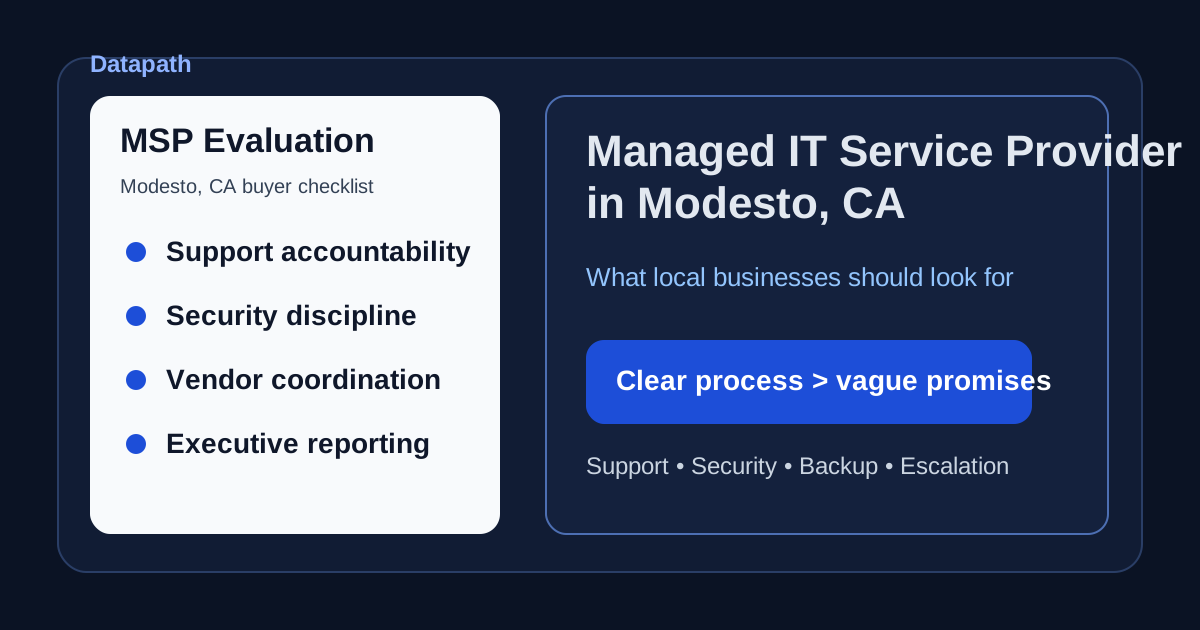
What should a business look for in a managed IT service provider in Modesto, CA?
A business should look for a managed IT service provider in Modesto, CA that can prove how it handles support, security, vendor coordination, backup validation, escalation, and long-term planning. The right provider is not just nearby. The right provider makes IT more accountable, more resilient, and easier for leadership to manage.12
For most local businesses, the decision is less about buying “IT help” and more about choosing an operating partner. A provider may sound responsive in a sales meeting, but the real question is whether it can consistently reduce downtime, tighten security controls, and give your team clearer visibility into risk. We recommend evaluating MSPs the same way you would evaluate any business-critical partner: by process maturity, evidence, and fit.
Why is choosing the right Modesto MSP more important than it looks?
Many businesses do not switch providers because of one catastrophic failure. They switch because small operational frustrations pile up into a bigger trust problem. Tickets bounce between vendors. Security tasks happen inconsistently. Backups are assumed to work but rarely tested. Leadership hears that everything is “handled,” yet nobody can explain the current priorities or the biggest unresolved risks.
Local presence matters, but operating discipline matters more
A provider in or near Modesto can absolutely be an advantage. Local familiarity can help with site visits, regional vendors, on-site projects, and relationships with businesses that prefer face-to-face support. But local presence alone is not a differentiator if the MSP still lacks documentation, change discipline, escalation ownership, or a repeatable support process.
In our experience, businesses get the best outcomes when the provider combines regional responsiveness with a mature service model. That means clearly defined support channels, proactive monitoring, security standards, and a roadmap that connects IT work to business priorities. The provider should be able to support a single office today and a more complex environment tomorrow.
A weak provider creates hidden costs long before a major outage
When a managed IT relationship is weak, the business usually pays in quieter ways first:
- recurring support delays
- unclear ownership when multiple vendors are involved
- avoidable downtime from poor maintenance habits
- inconsistent user onboarding and offboarding
- incomplete security controls around identity and access
- leadership time wasted chasing answers during incidents
Those costs add up fast. CISA continues to emphasize basic cyber hygiene, recovery readiness, and coordinated response because ordinary operational gaps are still what turn manageable problems into expensive ones.1 We agree. The right MSP should reduce that chaos, not normalize it.
What capabilities should a serious managed IT provider in Modesto actually have?
A provider should be able to explain exactly how it runs support, security, and accountability on a day-to-day basis. If the sales conversation stays too abstract, that is usually a warning sign.
Support should be structured, measurable, and easy to escalate
A strong MSP should offer more than “call us if something breaks.” It should show you how requests enter the system, how priorities are assigned, when issues escalate, and what happens after hours.
We recommend asking for specifics around:
| Capability | What to look for |
|---|---|
| Help desk workflow | clear intake path, response expectations, named escalation process |
| Monitoring coverage | endpoints, servers, network gear, Microsoft 365, backups, and critical applications |
| After-hours support | who responds, what qualifies as urgent, how communications work |
| On-site support | when a technician comes on-site and how dispatch is handled |
| Reporting cadence | monthly or quarterly reviews with trends, risks, and open actions |
Support quality is not just about ticket speed. It is about whether the provider gives your business a dependable operating rhythm. Teams comparing options should also review our guidance on what managed IT services include and how to evaluate IT outsourcing companies.
Security should be built into the service model, not bolted on later
A managed IT service provider should not treat cybersecurity as a vague add-on. Even if your organization also uses a specialized security partner, the MSP still needs to own a strong operational baseline. NIST’s Cybersecurity Framework 2.0 reinforces the importance of governance, protection, detection, response, and recovery as connected disciplines rather than separate checkboxes.2
That baseline usually includes:
- multifactor authentication enforcement and review
- privileged access control
- patch management for endpoints, servers, and network devices
- endpoint protection and alert triage
- backup monitoring and restore validation
- secure onboarding and offboarding practices
- vendor and remote-access governance
If a provider cannot explain how those basics are handled, that is a legitimate reason to keep looking. Businesses with stronger compliance needs should also compare adjacent Datapath resources on managed cybersecurity services, managed NGFW, and our finance and healthcare solution pages.
Vendor coordination should not fall back on your leadership team
One of the clearest signs of an immature MSP is that your team still has to orchestrate everything when a real issue happens. Internet provider problem? Cloud platform issue? Copier vendor? Phone vendor? Firewall problem? If the MSP does not step in and drive resolution, your “managed” support model is not really managed.
We think one of the most valuable jobs of an MSP is serving as the coordination layer across your environment. That means triaging the issue, pulling in the right vendors, keeping stakeholders informed, and making sure accountability does not disappear into a multi-vendor blame loop.
How should a Modesto business evaluate providers before signing?
We recommend evaluating MSPs with a buyer’s mindset, not a break-fix mindset. The goal is not just to compare hourly rates or count how many services are listed on a proposal. The goal is to understand how the provider behaves under pressure, how it communicates, and whether it can support your business as complexity grows.
Ask questions that reveal the real operating model
These questions tend to expose whether a provider is disciplined or just polished:
- What systems do you actively monitor every day and after hours?
- How do you review failed backups and validate restores?
- How do you enforce MFA and control privileged access?
- How do you handle onboarding and offboarding for employees and vendors?
- What reporting will leadership receive each month or quarter?
- Who coordinates third-party vendors during a major outage?
- How do you document environments, changes, and known risks?
- What does your escalation path look like for urgent business-impacting issues?
If the answers stay generic, that is information. A mature provider should be able to explain tools, process, ownership, and communication with confidence.
Look for fit with your size, industry, and risk profile
Not every business in Modesto needs the same kind of provider. A professional services firm with 40 users, a healthcare organization with regulated data, and a multi-site manufacturer all have different operational priorities. We recommend making sure the MSP has experience supporting businesses with similar complexity, compliance exposure, and uptime expectations.
That is especially important for organizations that need more than basic desktop support. If your business depends on cloud identity, line-of-business applications, backup confidence, security oversight, and multi-vendor coordination, the provider needs enough depth to support all of that as one accountable system. Related Datapath guides like best MSP for 100+ employees and fixed-fee IT outsourcing can help buyers pressure-test proposals.
Price matters, but accountability matters more
We understand why cost is often the first filter. But a lower monthly fee is rarely a bargain if it buys weak communication, inconsistent maintenance, or unclear ownership during incidents. A better comparison is total operational value: does the provider reduce downtime, improve security discipline, and help leadership make smarter decisions?
That is why we recommend comparing providers on the full picture:
| Evaluation area | Weak MSP signal | Strong MSP signal |
|---|---|---|
| Support model | informal, reactive, hard to escalate | documented, measurable, clearly owned |
| Security baseline | vague add-on | built into day-to-day operations |
| Vendor coordination | client chases vendors | MSP owns triage and escalation |
| Reporting | ticket dump only | business-level risks, trends, recommendations |
| Local fit | nearby but generic | understands Modesto market and business realities |
What red flags should local businesses watch for?
The wrong provider usually tells on itself early. Sometimes the warning signs show up in the proposal. Sometimes they show up in the answers you do not get.
Watch for vague promises without operating detail
Phrases like “we are proactive,” “we care about customer service,” or “we become your IT department” do not mean much without evidence. We want to hear how often systems are reviewed, how alerts are triaged, how backup exceptions are handled, and how leaders are kept informed.
Be careful with proposals that bury responsibility
A provider should make ownership clearer, not murkier. If the contract is fuzzy about after-hours support, vendor coordination, security responsibilities, project boundaries, or reporting, your team may discover too late that critical gaps were never actually covered.
Do not ignore cultural fit and communication style
We think this matters more than many buyers expect. The provider should be able to speak clearly with executives, work respectfully with end users, and collaborate well with internal IT or outside specialists when needed. A technically competent MSP can still be a poor fit if communication creates friction every week.
Why Datapath for managed IT in Modesto?
At Datapath, we think businesses should expect more than generic support. They should expect a managed IT partner that creates clearer ownership, stronger operational discipline, and more confidence in how technology is run day to day.
That means we focus on the fundamentals that actually change outcomes: responsive support, better visibility, stronger cybersecurity guardrails, cleaner vendor coordination, and planning that connects technical work to business risk. If your team is evaluating providers right now, start with the Datapath homepage, review our managed IT services overview, explore our Modesto location page, and browse our resources and guides for deeper buying guidance.
FAQ: managed IT service provider in Modesto, CA
What should I ask a managed IT service provider in Modesto before signing?
You should ask how the provider handles monitoring, escalation, backups, MFA, privileged access, vendor coordination, onboarding, offboarding, and executive reporting. Those answers reveal far more than a generic service list.
Is it better to hire a local MSP in Modesto or a remote provider?
A local MSP can be valuable when your business benefits from on-site support and regional familiarity, but local presence alone is not enough. We recommend choosing the provider with the stronger operating model, clearer accountability, and better fit for your environment.
What is the biggest red flag when choosing an MSP?
The biggest red flag is vagueness. If a provider cannot explain exactly how it monitors systems, handles security basics, validates backups, and escalates urgent issues, the relationship will likely feel unclear after you sign too.
Do managed IT providers in Modesto also handle cybersecurity?
They should handle a strong operational cybersecurity baseline, including MFA, patching, endpoint protection oversight, backup validation, and access governance. Some organizations may also need deeper managed security services depending on compliance requirements and risk profile.12
Sources
- CISA Cyber Guidance for Small and Midsize Businesses
- NIST Cybersecurity Framework 2.0
- Datapath: What Is Managed IT Services? A Complete Guide
- Datapath: How to Evaluate IT Outsourcing Companies
- Datapath: Questions to Ask Before Hiring a Cybersecurity Provider in Modesto
