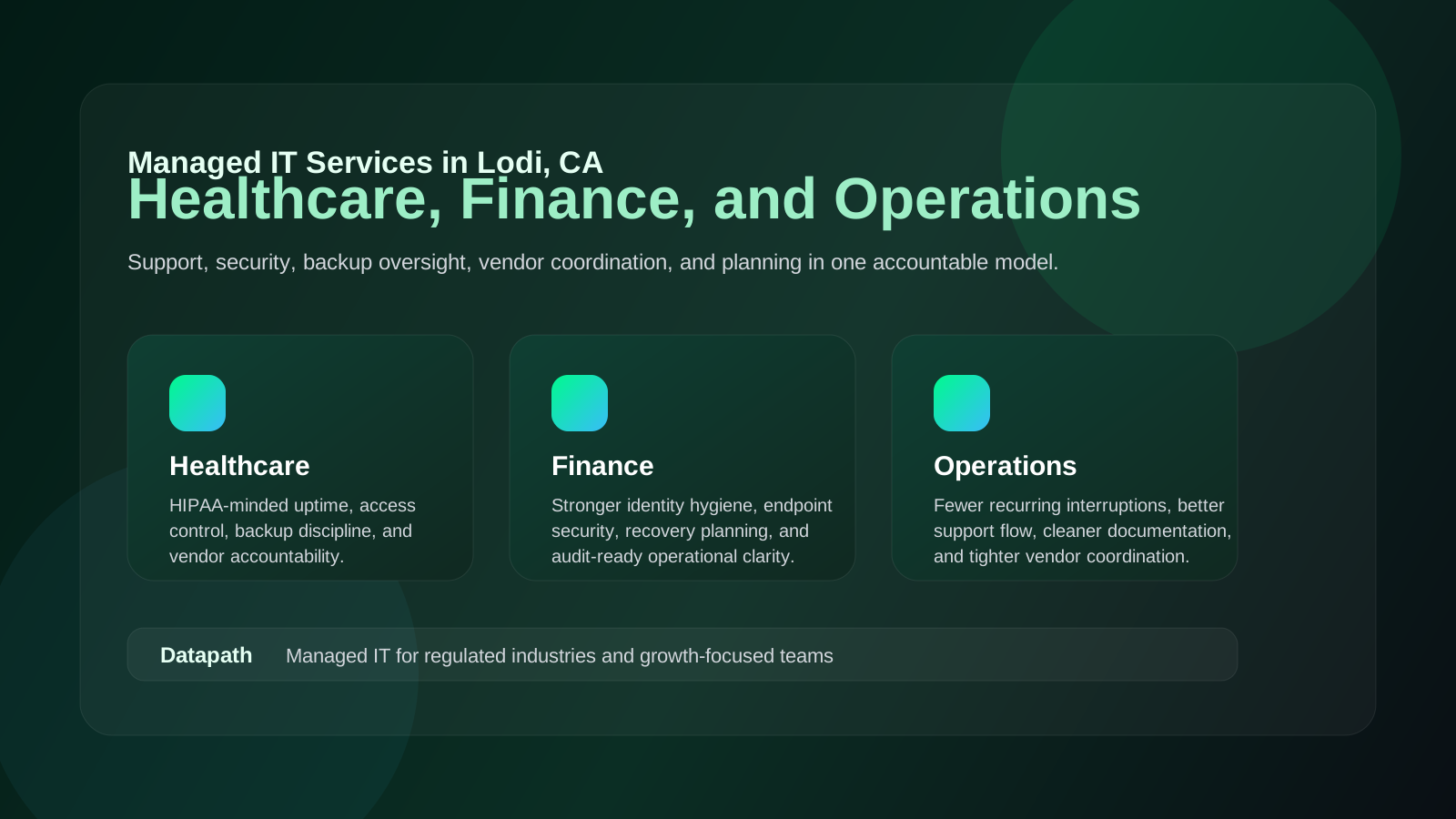

What should businesses expect from managed IT services in Lodi, CA?
Managed IT services in Lodi, CA should give leadership more than outsourced troubleshooting. A serious provider should take recurring responsibility for user support, monitoring, patching, cybersecurity administration, backup oversight, vendor coordination, and planning so the business gets a steadier operating model instead of a pile of disconnected IT tasks.12 That matters even more for healthcare, finance, and operations-heavy companies, where downtime, poor access control, and weak recovery discipline create outsized business risk.
For many Lodi organizations, the real problem is not a lack of tools. It is a lack of operational clarity. One internal generalist, office manager, or stretched IT lead can usually keep things moving for a while, but eventually Microsoft 365 issues, endpoint drift, line-of-business application support, cyber insurance questions, backup reviews, and vendor escalations all start competing for attention. That is the point where managed IT should create calm.
In our experience, the best managed IT relationship feels simpler over time. Recurring issues get documented and reduced. Users know where to go for help. Backups are monitored with real ownership. Leadership gets cleaner reporting. When a provider cannot deliver that, the service is probably too shallow no matter how polished the proposal looks.
What should managed IT services in Lodi actually include?
Lodi businesses should expect an MSP to cover the recurring work that keeps the environment stable, secure, and governable. NIST’s Cybersecurity Framework 2.0 is useful here because it frames resilience as a combination of governance, protection, detection, response, and recovery rather than isolated point solutions.3 For business leaders, CISA’s Cyber Essentials guidance makes the same practical point: reliable operations start with visibility, prioritization, and disciplined execution of the basics.4
Help desk, maintenance, and infrastructure coverage
At minimum, managed IT services should include help desk support, endpoint and server monitoring, patch management, Microsoft 365 administration, onboarding and offboarding support, network oversight, vendor escalation, and documentation. That sounds ordinary, but this layer is what keeps a business from spending every week on the same avoidable issues.
A strong provider should not just close tickets. It should reduce repeat friction by identifying root causes, standardizing configurations, and tightening ownership. If the same laptop issue, wireless complaint, file-share problem, or email disruption keeps returning, leadership should be able to ask what is being fixed systemically rather than hearing that the ticket was resolved again.
Security baseline and recovery readiness
For regulated and service-heavy businesses, managed IT should also include a practical security and recovery baseline. That means MFA enforcement, endpoint protection oversight, backup monitoring, restore escalation, access reviews, patch exception tracking, and a clear path for after-hours incident response. IBM’s data breach research keeps reinforcing the business cost of disruption, while CISA continues to emphasize fundamentals like strong identity controls, patching, and recoverability.45
A workable baseline usually looks something like this:
| Managed IT area | What should be included | Why it matters |
|---|---|---|
| Identity and access | MFA, provisioning, offboarding, role reviews | Reduces preventable account compromise |
| Endpoint security | EDR oversight, remediation coordination, policy checks | Improves containment when threats appear |
| Backup and recovery | Job monitoring, retention review, restore testing support | Makes outages and ransomware events less chaotic |
| Vendor coordination | Microsoft, ISP, cloud, and app escalation | Keeps ownership clear during incidents |
| Reporting and planning | Service reviews, open-risk summaries, roadmap guidance | Helps leadership make cleaner decisions |
That is also why related Datapath resources matter. Pages like What Is Managed IT Services?, How Much Do Managed IT Services Cost?, and the Datapath homepage are useful because they show what mature IT operations should look like beyond the sales pitch.
Why do healthcare, finance, and operations teams in Lodi need a stronger MSP model?
Different industries feel IT pressure in different ways, but the pattern is the same: the environment becomes harder to run than the internal team can comfortably govern.
Healthcare organizations need audit-ready uptime and data discipline
Healthcare teams are expected to protect PHI, support clinical workflows, maintain access control, and recover quickly when systems fail. That means managed IT is not just about user support. It is about helping the organization run a defensible environment around identity, backups, endpoints, email, and vendor access. If your team is reviewing HIPAA obligations, our healthcare solutions page, HIPAA-compliant IT services guide, and HIPAA risk assessment checklist are all relevant reference points.
Financial firms need cleaner control over access, vendors, and resilience
Finance teams feel the pressure differently. Customer data, transaction systems, audit expectations, cyber insurance scrutiny, and third-party risk reviews all raise the bar. A financial services MSP should be able to explain how it handles identity hygiene, endpoint protection, logging, vendor coordination, recovery planning, and support escalation without turning every security conversation into a product upsell. Datapath’s financial services solutions page, GLBA safeguards checklist, and FINRA cybersecurity checklist show the kinds of controls buyers should already be thinking about.
Operations-heavy businesses need fewer preventable interruptions
For manufacturers, logistics teams, field-service businesses, and office-based operations groups, the biggest pain is usually recurring friction. Slow onboarding, brittle wireless coverage, poor vendor coordination, delayed support, and backup blind spots create a constant drag on execution. A better MSP should reduce those interruptions, tighten documentation, and make the environment more predictable.
That operational discipline matters just as much as technical depth. Plenty of providers can talk about tools. Fewer can explain how they reduce recurring issues, how they escalate after hours, and how they keep leadership informed when multiple vendors are involved.
How should a Lodi business evaluate managed IT providers in 2026?
Almost every MSP claims to be proactive, strategic, responsive, and security-focused. The useful question is whether the provider can explain exactly how it runs the environment and how that operating model helps your team make better decisions.
Start with ownership and scope
Before comparing proposals, define what you expect the provider to own. That includes users, devices, locations, cloud systems, vendors, after-hours escalation, backup review, patch exception handling, and reporting cadence. If scope is fuzzy in the sales process, it usually stays fuzzy after signing.
Questions worth asking include:
- Which systems and users are included by default?
- What happens after hours during a high-severity issue?
- Who owns backup review and restore escalation?
- Which security controls are included versus sold separately?
- How are recurring incidents analyzed and reduced over time?
- What will leadership actually see in monthly or quarterly reviews?
A strong provider should answer those directly. If the answers stay vague, that is usually the real product.
Look for regulated-industry fit, not just local presence
Local responsiveness still matters in Lodi, especially for hardware issues, office changes, network cutovers, and on-site recovery work. But zip code alone is not enough. The better test is whether the provider combines regional responsiveness with enough process maturity to support a healthcare group, financial firm, or operational business under pressure.12
That is where Datapath’s broader content can help frame the comparison. How to Evaluate IT Outsourcing Companies, Managed Cybersecurity Services, and our resources hub all point toward the same standard: fewer surprises, clearer accountability, and better operating discipline.
Prefer process over tool lists
A long tool stack is not the same as a strong managed service. Better providers can explain how patching is governed, how exceptions are handled, how backup failures are escalated, how vendors are coordinated during outages, and how they translate technical work into business-level reporting.
That matters because most mid-market businesses are not buying tooling. They are buying reliability, response quality, and decision-ready visibility.
Why Datapath for managed IT services in Lodi, CA?
We think managed IT should help leadership run a calmer, more accountable environment. That means reducing recurring support friction, tightening the security baseline, improving backup and vendor discipline, and giving decision-makers a clearer view of what matters now and what needs attention next.
For healthcare, finance, and operations teams, that operating model matters more than generic promises about responsiveness. You need a partner that can support the day-to-day, keep the environment governable, and make it easier to answer hard questions from auditors, insurers, and executive stakeholders.
If you are comparing managed IT services in Lodi, review our managed IT services overview, explore our healthcare and financial services capabilities, and talk with our team if you want a practical conversation about fit, ownership, and next steps.
Frequently Asked Questions
What are managed IT services in Lodi, CA?
Managed IT services in Lodi, CA are ongoing outsourced IT operations that typically include support, monitoring, patching, cybersecurity administration, backup oversight, vendor coordination, and planning. The goal is to create a more stable and accountable technology environment than a reactive break-fix model.
Are managed IT services worth it for healthcare and finance organizations?
Usually, yes. Healthcare and finance teams face heavier uptime, security, audit, and recovery pressure than general business environments, so the value comes from stronger control over day-to-day operations, cleaner documentation, and better incident readiness.
How do you choose a managed IT provider in Lodi?
Start by defining scope, ownership, reporting needs, and after-hours expectations before comparing vendors. Then evaluate each provider on process discipline, recovery readiness, security baseline, regulated-industry fit, and whether they can clearly explain who owns what.
Does a local Lodi MSP matter if most support is remote?
Yes, but mostly when local availability is paired with strong process. Remote support resolves many issues efficiently, but local coverage still matters for infrastructure work, hardware failures, network changes, and higher-touch incident coordination.
Sources
- Advent Technologies: IT Support Company in Lodi
- VC3: Managed IT Services for Businesses in Lodi, California
- NIST Cybersecurity Framework 2.0
- CISA Cyber Essentials
- IBM Cost of a Data Breach Report
- Cloudticity: Healthcare Cloud Managed Services