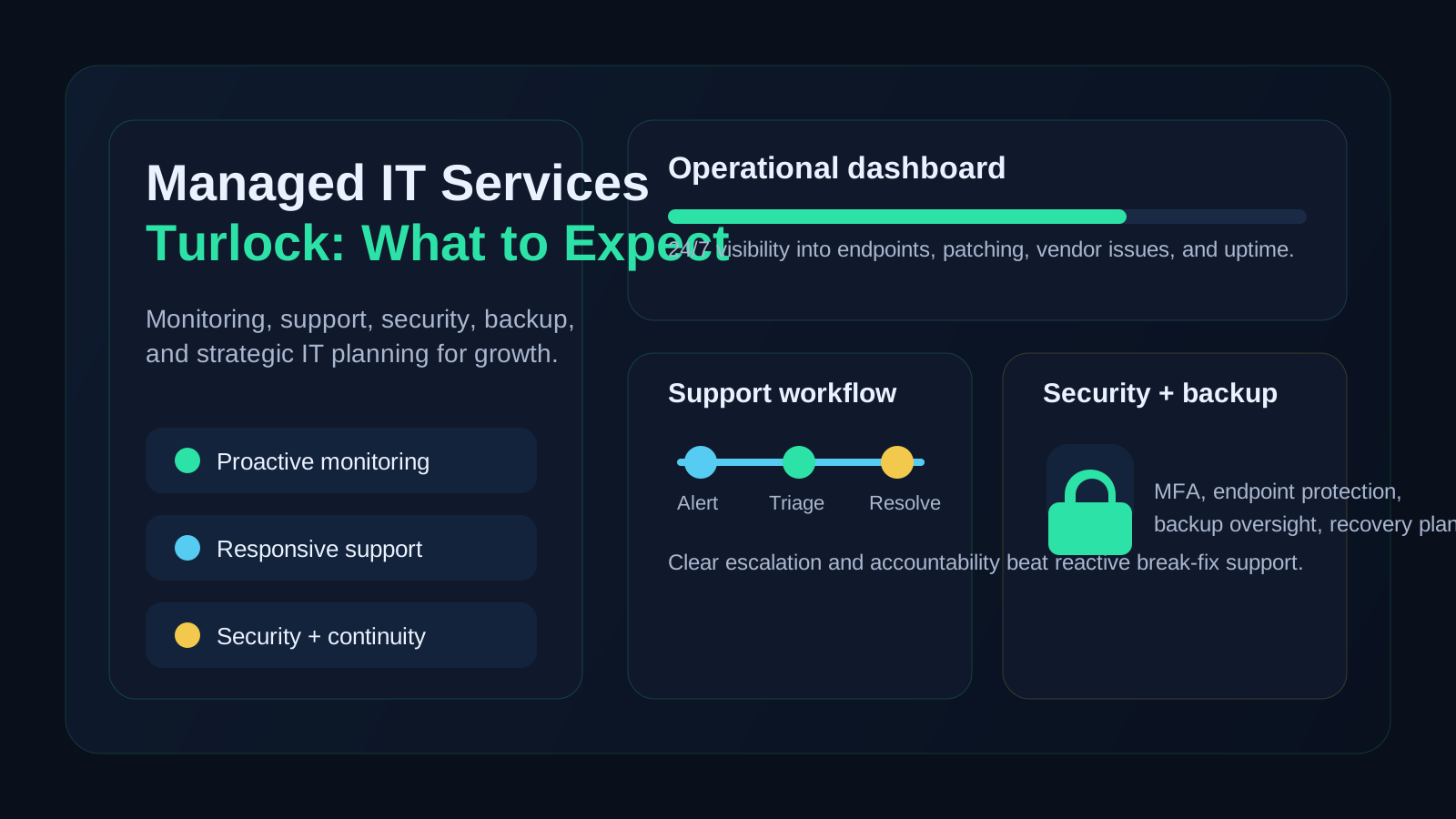

What should a Turlock business expect from managed IT services?
A Turlock business should expect managed IT services to include proactive monitoring, responsive support, cybersecurity management, backup and disaster recovery oversight, vendor coordination, and strategic IT planning.123 The point is not just to fix computers faster. The point is to run the environment in a way that reduces downtime, makes risk easier to manage, and gives leadership a clearer picture of what IT is doing for the business.
That distinction matters. Many companies still buy support as if technology only matters when something breaks. In practice, most costly IT problems build slowly: weak patching habits, aging hardware, unclear ownership, inconsistent backup validation, and vendors who each manage one corner of the environment without owning the whole picture. In our experience, managed IT services in Turlock are most valuable when they replace that reactive model with a steadier operating rhythm.
For growing organizations in manufacturing, professional services, agriculture, healthcare, education, and multi-site operations, that rhythm matters more than marketing language. If a provider says they are proactive, you should be able to see how that shows up in monitoring, maintenance, reporting, escalation, and long-term planning.
What do managed IT services actually include?
At a basic level, managed IT services mean outsourcing day-to-day IT operations to a managed service provider, or MSP, that takes responsibility for keeping systems stable, secure, and supportable.4 A good MSP does not wait for users to complain before acting. It monitors the environment, performs recurring maintenance, resolves issues, and helps the business make better technology decisions before small problems become expensive ones.15
What is different from break-fix support?
The biggest difference is accountability. Break-fix support usually starts after something is already broken. Managed IT services are supposed to reduce how often that happens by standardizing:
- endpoint and server monitoring
- patching and update review
- user support workflows
- security tooling and alert response
- backup checks and restore readiness
- hardware lifecycle planning
- vendor escalation and coordination
That is why many businesses compare managed IT to an operating model rather than a help desk subscription. If the provider is doing the job well, your environment should become less chaotic over time, not just more ticket-driven.
Why does the local Turlock context matter?
Local fit is not everything, but it does matter. Turlock-area businesses often operate with lean internal teams, practical uptime requirements, and little patience for vague support processes. A provider serving the Central Valley should understand that the real issue is usually not whether a ticket can be closed. It is whether the provider can keep users working, coordinate outside vendors, and support growth without adding operational friction.
For many organizations, that means wanting both remote efficiency and local accountability. We think that is especially important for teams with line-of-business software, compliance pressure, multi-site networks, or limited internal IT depth.
What services should be included in the monthly relationship?
A serious managed IT provider should be able to explain the service scope in plain language. At minimum, we think businesses should expect the following.
Proactive monitoring and maintenance
The provider should continuously watch critical systems for issues like failed backups, low storage, hardware degradation, connectivity problems, and suspicious activity.13 That monitoring should connect to action. Alerts mean very little if nobody owns triage, escalation, and documentation.
You should also expect a repeatable maintenance cadence that covers operating system updates, firmware review, workstation standards, and lifecycle planning. Proactive monitoring only matters if it actually leads to fewer avoidable interruptions.
Responsive support and escalation
Managed IT services should include a clearly defined service desk with documented response expectations, support channels, and after-hours escalation options where needed.26 If your team cannot tell who to contact, how urgent issues are prioritized, or what happens after 5:00 PM, the support model is not mature enough.
A useful provider should make these workflows clear:
- how users submit issues
- how incidents are prioritized
- when onsite support is required
- how communications are handled during major outages
- who owns coordination with internet, cloud, or application vendors
Cybersecurity and baseline hardening
Modern managed IT is not complete without security coverage. That usually means endpoint protection, multifactor authentication support, patch discipline, email-security controls, access review, and some level of monitoring for suspicious activity.278
For businesses in regulated or data-sensitive environments, security should not be treated as a separate bolt-on. It should be part of day-to-day support. That is one reason we often recommend comparing a provider’s support model against broader Datapath guidance on managed cybersecurity services, cybersecurity risk assessments, and our broader solutions overview.
Backup, disaster recovery, and continuity planning
A provider should be able to explain how your backups are monitored, how often restores are tested, which systems have recovery priority, and who owns the recovery sequence during an outage.29 Backup success is not the same thing as recovery readiness.
We usually recommend asking questions like these:
| Question | Why it matters |
|---|---|
| Which systems have defined recovery priorities? | Not every outage has the same business impact |
| How often are restores tested? | Recovery is only proven when it is exercised |
| Who communicates during a major incident? | Confusion slows recovery |
| Which vendors are involved in restoration? | Third-party dependencies often create delays |
| What documentation exists for business continuity? | Good recovery depends on more than software |
If your team wants to go deeper on this area, compare your current approach with our backup and disaster recovery guide and IT consulting and storage services.
How should a Turlock business evaluate an MSP?
A Turlock business should evaluate an MSP based on operating discipline, service clarity, reporting, local fit, and the provider’s ability to reduce recurring friction. Plenty of vendors can say the right words. Fewer can show how their model works in practice.
What should you ask before signing?
We recommend asking direct questions such as:
- What systems are monitored today, and who reviews alerts?
- How are patches approved, scheduled, and verified?
- What security controls are included by default?
- How are backups checked and how often are restores tested?
- What reporting does leadership receive each month?
- How do you handle third-party vendor coordination?
- What happens if we grow, add a site, or change cloud platforms?
Those questions tend to surface the difference between a provider with documented processes and one that mainly sells reassurance.
What are the warning signs of a weak managed IT offering?
We get skeptical when a provider cannot clearly explain scope, refuses to define support boundaries, or leans too heavily on generic claims like “24/7 monitoring” without showing what that means operationally. Other warning signs include:
- unclear onboarding process
- no discussion of recovery testing
- weak documentation practices
- vague security ownership
- limited reporting for leadership
- no plan for lifecycle or roadmap decisions
If your team is comparing options now, it is worth reviewing our related posts on what managed IT services are, how to evaluate IT outsourcing companies, and the Datapath homepage.
What should the relationship feel like after the first 90 days?
After the first 90 days, a healthy managed IT relationship should feel more predictable. Users should know where to get help. Leadership should have better visibility into recurring issues. Hardware and software risk should be easier to understand. Open items should be tracked instead of rediscovered.
What operational improvements should you notice?
We think businesses should expect to see progress in five areas:
- fewer recurring support fires
- clearer ownership across vendors and systems
- better patching and standardization
- more confidence in security and backup hygiene
- more usable reporting for planning and budgeting
That does not mean every issue disappears. It means the environment gets easier to manage because someone is actively running it.
When does managed IT create the most value?
Managed IT tends to create the most value when the business has outgrown informal support but is not ready to build a large internal IT department. That usually includes organizations with:
- 25+ employees and growing operational dependency on technology
- multiple offices, cloud systems, or industry applications
- increased compliance or insurance requirements
- recurring downtime or support inconsistency
- too many vendors and no single point of accountability
For those businesses, the real benefit is usually not one tool or one project. It is having a provider that turns IT into a more deliberate operating function.
Why Datapath for managed IT services in Turlock?
We think Turlock businesses need more than generic support promises. They need an operating model that connects help desk work, cybersecurity, vendor coordination, continuity planning, and longer-term decision-making. That is the difference between support that feels busy and support that actually reduces operational drag.
At Datapath, we focus on accountability, practical response workflows, and support models that hold up under real business pressure. That means helping teams improve uptime, reduce avoidable friction, and make better decisions about systems, cloud services, security, and growth. If your business is comparing providers now, start with our managed IT services overview, review our resources and guides hub, and talk with our team about what a stable support model should look like for your environment.
FAQ: Managed IT services in Turlock
What should managed IT services include for a Turlock business?
Managed IT services should include proactive monitoring, user support, patching, cybersecurity coverage, backup oversight, vendor coordination, and strategic planning. The goal is to reduce interruptions while making IT easier to govern and budget.123
Are managed IT services better than break-fix support?
For most growing businesses, yes. Break-fix support only starts after something is already broken. Managed IT services are designed to reduce preventable incidents through monitoring, maintenance, and more structured accountability.45
How do I compare managed IT providers in Turlock?
Compare them on scope clarity, support responsiveness, security ownership, reporting, backup validation, and how well they coordinate vendors. A provider should be able to explain its operating process without hiding behind marketing language.
Do managed IT services help with cybersecurity and compliance?
Yes. Most modern managed IT relationships include baseline security controls such as endpoint protection, access management support, patch discipline, and monitoring. Businesses with regulated requirements may also need deeper security services layered on top.278
Sources
- Group One Consulting: Turlock Managed IT Services and Support
- Network Builders IT: Cybersecurity and IT Services in Turlock, CA
- VaultEdge IT: Managed IT Services in Turlock
- R3: The Complete Guide to Managed IT Services
- SwiftTech Solutions: Getting Started with Managed IT Services: What to Expect
- Advent Technologies: IT Support Company in Turlock
- Cortavo: Best Managed IT Services in California (2026 Guide)
- Ready.gov: Business Emergency Plans and Recovery
- CISA: Implementing Phishing-Resistant MFA
