Managed Helpdesk
Responsive user support for everyday issues, escalations, onboarding, permissions, Microsoft 365, endpoint problems, and line-of-business application access.
Managed IT Services
Datapath gives internal teams a single accountable partner for helpdesk, infrastructure management, IT asset lifecycle management, security operations, cloud support, fixed monthly IT pricing conversations, cybersecurity scope, and executive IT guidance.
What Datapath Delivers
Responsive user support for everyday issues, escalations, onboarding, permissions, Microsoft 365, endpoint problems, and line-of-business application access.
Monitoring, patching, vendor coordination, backup checks, network management, asset inventory, device lifecycle planning, and documentation for servers, endpoints, and cloud systems.
vCIO planning, budget forecasting, compliance coordination, quarterly reviews, and executive reporting so technology decisions are visible and defensible.
Buyer Questions
Buyers comparing fixed-fee IT support, per-user pricing, managed services tiers, and hourly support need more than a monthly number. Datapath maps each pricing signal to service scope, cybersecurity coverage, exclusions, and operating accountability.
The buyer wants a provider to own daily support, escalation, vendors, Microsoft 365, endpoints, backups, and reporting because internal capacity is stretched.
Datapath routes this intent through dedicated IT outsourcing services with fully managed and co-managed options tied back into managed IT operations.
The buyer is comparing whether to outsource helpdesk, infrastructure, security, backup, vendor coordination, and strategic reporting.
Datapath scopes IT outsourcing around support ownership, infrastructure management, cybersecurity alignment, backup oversight, vendor coordination, and executive reviews.
A growing business is seeing recurring tickets, security gaps, vendor confusion, or growth pressure and wants to know whether managed IT is the right next step.
Datapath reviews support volume, Microsoft 365, endpoints, backups, vendors, cybersecurity basics, locations, and whether fully managed or co-managed support fits.
The buyer is changing providers and needs continuity across access, documentation, backups, tools, and support routing.
Datapath plans MSP transitions with ownership maps, cutover sequencing, outgoing-provider access removal, backup validation, and first-month stabilization.
The buyer wants help replacing an MSP without downtime, missing documentation, or security gaps.
Datapath connects switching-MSP planning to managed IT onboarding, tool overlap, privileged-access review, user communication, and executive reporting.
Recurring issues, downtime, weak security visibility, or growth friction are making reactive hourly support too risky.
Datapath helps teams move into managed operations with helpdesk ownership, monitoring, patching, backup validation, cybersecurity alignment, vendor coordination, and leadership reporting.
The buyer needs security, patching, alert follow-up, backup oversight, and incident escalation to become recurring work instead of one-off tickets.
Datapath ties managed IT to cybersecurity controls, Microsoft 365 administration, endpoint management, backup readiness, service reporting, and escalation paths.
The buyer needs a practical policy for asset ownership, procurement, endpoint standards, lifecycle stages, maintenance, reassignment, and secure retirement.
Datapath helps turn the policy into managed IT workflows for inventory, endpoint configuration, patching, warranty and refresh planning, offboarding, disposal evidence, and service reporting.
The buyer needs clear rules for replacing or retiring devices, closing licenses, wiping data, documenting custody, and removing unsupported systems from production.
Datapath connects end-of-life policy to backup checks, user handoffs, secure disposal evidence, vendor coordination, budget planning, and recurring lifecycle reviews.
The buyer wants laptops, desktops, and mobile devices managed from purchase and onboarding through patching, reassignment, replacement, and disposal.
Datapath supports endpoint lifecycle management through standards, helpdesk workflows, security baselines, inventory reviews, ownership updates, and roadmap reporting.
The buyer wants predictable monthly support without surprise hourly billing for recurring operations.
Datapath defines supported users, systems, hours, escalation, cybersecurity scope, backup ownership, vendor handoffs, and reporting before the agreement is treated as fixed fee.
The buyer needs a realistic monthly number and a way to compare included support, security, backup, after-hours response, and exclusions.
Datapath scopes users, devices, sites, support hours, Microsoft 365 ownership, cybersecurity depth, backup validation, vendor work, onboarding, and project boundaries before pricing is compared.
The buyer wants a benchmark but also needs to know why proposals vary.
Datapath uses pricing review conversations to separate recurring operations from one-time cleanup, security remediation, migration work, hardware refreshes, and compliance reporting.
The buyer wants to translate per-user pricing into a monthly budget before comparing providers.
Datapath reviews user count, shared devices, servers, sites, cybersecurity tooling, after-hours rules, onboarding work, backup ownership, and project boundaries before treating the monthly number as comparable.
The buyer wants per-user pricing that is predictable without hiding servers, network gear, shared devices, security tools, or after-hours support.
Datapath compares per-user, fixed-fee, tiered, and hybrid models against the operating scope leadership actually expects the provider to own.
The buyer needs a per-user monthly benchmark that still accounts for scope, exclusions, cybersecurity, infrastructure, and support hours.
Datapath turns per-user pricing into an operating-scope review so the buyer can compare support hours, tools, backups, Microsoft 365, network devices, project rules, and reporting.
A small business wants to compare per-user, per-device, fixed-fee, tiered, and hybrid MSP pricing without choosing a low quote that omits important work.
Datapath helps small and mid-sized teams compare MSP proposals by support scope, security coverage, backup ownership, onboarding cleanup, vendor coordination, and recurring reporting.
The buyer is deciding which pricing model is fair for their support profile and environment complexity.
Datapath explains how each model handles users, devices, shared workstations, servers, sites, security tools, after-hours support, and project exclusions before the agreement is signed.
The buyer needs support that understands tax-season urgency, confidential client records, secure portals, Microsoft 365, tax software vendors, backup recovery, and pricing scope.
Datapath routes accounting firms to a dedicated managed IT service path with helpdesk, secure file sharing, Microsoft 365 security, backup validation, vendor escalation, and executive reporting.
The buyer wants to compare per-user, fixed-fee, after-hours, onboarding, project, vendor, and cybersecurity assumptions before signing.
Datapath reviews accounting-firm managed IT pricing against included support scope, client-data controls, busy-season escalation, backup ownership, hidden fees, and vendor responsibilities.
Leadership wants to understand why MSP pricing is shifting toward security, compliance evidence, backup validation, and reporting instead of basic ticket handling only.
Datapath connects pricing to the work that now drives cost: identity, endpoint security, Microsoft 365 administration, vendor risk, backup recovery, SLA reporting, and roadmap ownership.
The buyer wants to know which work belongs in recurring managed IT and which work should stay project-based or hourly.
Datapath separates helpdesk, monitoring, patching, backup validation, and service reporting from migrations, emergency remediation, and scoped projects.
The buyer needs to know whether headcount is the right support-cost driver.
Datapath helps compare users, shared devices, servers, sites, security tools, support patterns, and true-up rules so per-user pricing does not hide infrastructure cost.
The buyer is comparing basic, advanced, and premium MSP packages and needs to know what changes between levels.
Datapath compares tier differences by support hours, response authority, cybersecurity depth, backup evidence, compliance reporting, and vCIO planning.
The buyer needs to know whether a fixed price covers true managed services or only a narrow support block.
Datapath defines recurring ownership, exclusions, project boundaries, after-hours rules, vendor coordination, and executive reporting so the fixed price matches the operating need.
The buyer wants contract language that turns support promises into clear scope, response, resolution, uptime, escalation, reporting, exclusions, and transition terms.
Datapath helps buyers review managed IT scope and SLA expectations before recurring support begins, then reports against ownership, open risk, and service expectations over time.
Leadership wants a simple way to track SLA adherence, ticket backlog, restoration performance, escalation quality, and recurring service misses instead of trusting a vanity dashboard.
Datapath helps define scorecard fields, priority targets, review cadence, exception notes, corrective actions, and executive reporting so accountability is visible month to month.
Leadership needs to know how quickly the provider starts triage, who escalates, who contacts vendors, and what restoration or workaround target applies during serious downtime.
Datapath defines priority rules, after-hours escalation, vendor handoffs, leadership communication, backup or workaround assumptions, and post-incident service review expectations.
The buyer needs a provider to track critical vendor commitments, uptime records, breach-notification handoffs, and evidence so accountability does not fragment during an outage or incident.
Datapath coordinates vendor tickets, uptime and incident evidence, escalation paths, breach-notification handoffs with counsel or compliance, and recurring service-review reporting.
A healthcare team needs response, resolution, uptime, backup recovery, security escalation, and vendor coordination aligned to clinical workflow risk.
Datapath maps support expectations to EHR, practice-management, imaging, phones, internet, patient communication, backup, and HIPAA-adjacent evidence needs.
The buyer wants to spot low-cost proposals that hide exclusions, weak response language, poor security ownership, or missing transition support.
Datapath reviews price against real operating scope: covered systems, after-hours rules, cybersecurity depth, backup ownership, vendor coordination, project exclusions, reporting, and exit support.
The buyer wants monitoring and response commitments to be written into the managed service model instead of treated as informal best effort.
Datapath connects monitoring, ticket triage, alert escalation, response authority, service reviews, and leadership reporting into the managed IT operating cadence.
The buyer wants to avoid lower-cost tiers that leave security gaps.
Datapath compares EDR, email security, MFA, firewall support, backup validation, alert routing, incident escalation, and evidence reporting inside each service scope.
The buyer needs a per-employee benchmark but does not want a cheap quote that excludes security, backup, after-hours coverage, or reporting.
Datapath scopes supported users, contractors, devices, service hours, cybersecurity coverage, backup ownership, vendor handoffs, project boundaries, and reporting before pricing is compared.
A larger organization needs pricing broken down by recurring support, infrastructure, cybersecurity, backup, identity, project governance, and executive visibility.
Datapath separates recurring managed IT from project work, data-security platforms, MFA and identity operations, backup validation, site support, and strategic reviews.
The buyer wants backup coverage that protects critical systems first without overbuying retention, DRaaS, or recovery tooling before restore evidence exists.
Datapath connects managed IT scope to backup monitoring, Microsoft 365 and SaaS recovery review, restore testing, ransomware assumptions, and disaster recovery reporting.
The buyer needs to account for users, contractors, administrators, rollout support, Conditional Access work, recovery methods, and exception cleanup.
Datapath aligns MFA planning with Microsoft 365 identity security, admin-role review, device trust, helpdesk readiness, and recurring evidence.
The buyer is comparing security platform cost but also needs to know who will operate alerts, remediation, compliance reporting, and response workflow.
Datapath maps EDR, MDR, identity, email security, backup, logging, vulnerability remediation, and reporting into the managed IT or managed cybersecurity operating model.
Operating Model
Datapath combines always-on monitoring, technician accountability, and strategic planning so IT does not depend on heroics or disconnected vendors.
We document the environment, close urgent gaps, confirm backups, review identity controls, and make support ownership clear.
Datapath runs daily monitoring, ticket triage, patching, vendor follow-through, endpoint upkeep, and service reporting.
Managed IT is tied to cybersecurity controls, including MFA, endpoint protection, network policy, vulnerability remediation, and response planning.
Leadership gets a roadmap for refresh cycles, cloud decisions, compliance needs, and operational improvements before spend becomes urgent.
Best Fit
Reduce tool sprawl and inconsistent support while giving leadership a predictable, accountable operating model.
Support HIPAA, FTC Safeguards, SOC 2, cyber insurance, and vendor risk needs with organized evidence and service ownership.
Protect public services, student data, and citizen operations with continuity planning, procurement-aware roadmaps, and clear escalation paths.
Related Pages
FAQ
Datapath managed IT services can include helpdesk, monitoring, patching, backup oversight, Microsoft 365 support, network management, vendor coordination, cybersecurity alignment, vCIO planning, and executive reporting.
Datapath can structure managed IT as a predictable recurring service when scope, users, systems, support hours, cybersecurity coverage, backup ownership, vendor coordination, project rules, and reporting expectations are clearly defined.
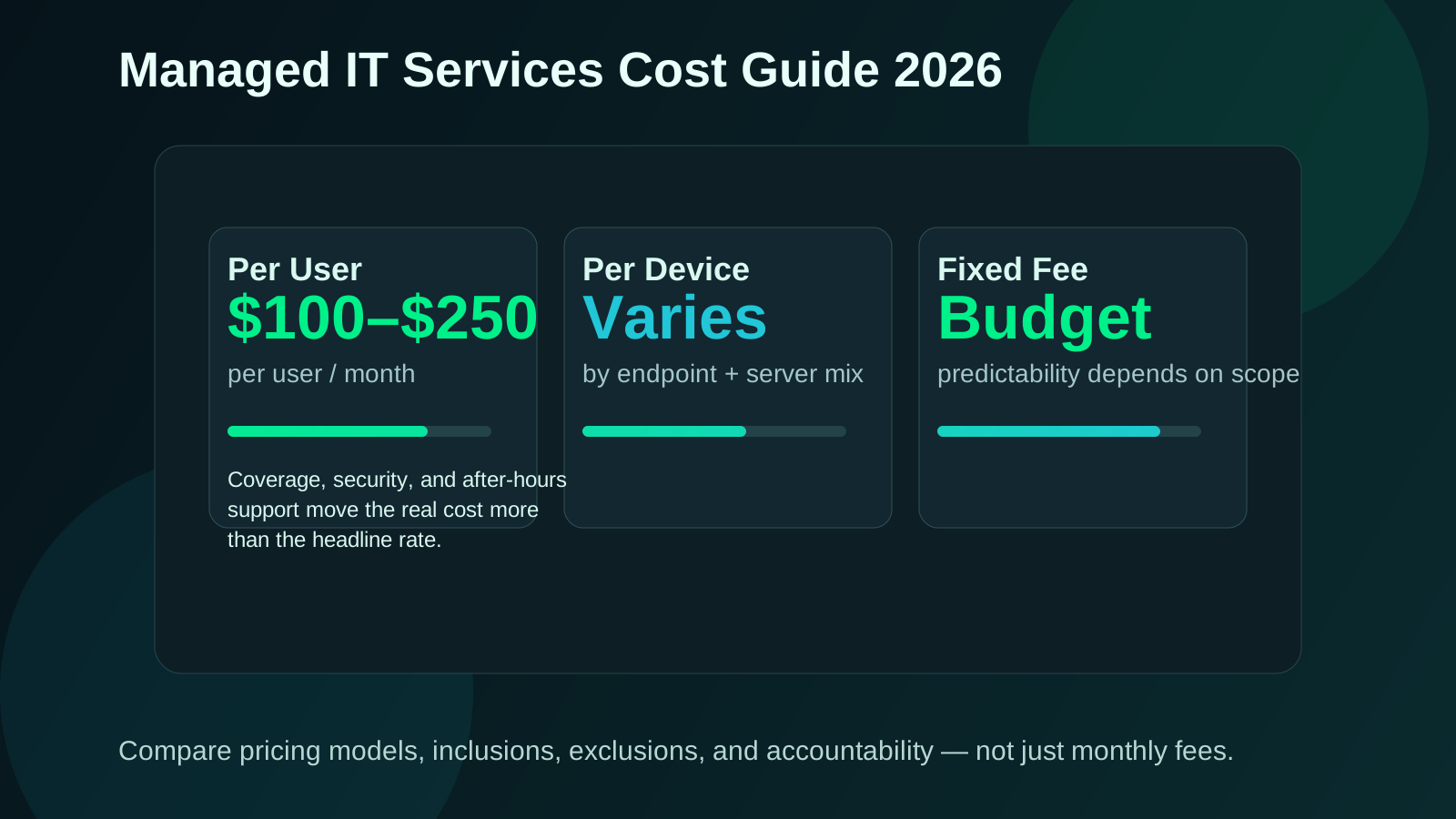
Managed IT services commonly price as a recurring monthly agreement based on users, devices, support hours, security tooling, backup ownership, locations, compliance needs, onboarding cleanup, and project exclusions. Datapath reviews scope first so pricing reflects real operating responsibility rather than a generic per-user number.
Managed IT providers usually charge through per-user, per-device, tiered, fixed-fee, or hybrid pricing. Datapath helps buyers compare which model fits their users, shared devices, servers, network gear, support hours, security coverage, backup ownership, and project boundaries.
Yes. Datapath can review managed IT services pricing proposals for included scope, exclusions, onboarding assumptions, per-user or fixed-fee terms, cybersecurity coverage, backup ownership, after-hours rules, SLA language, and the operational risk left with the client.
Yes. Datapath supports accounting firms, CPA practices, tax teams, and advisory firms with responsive helpdesk, Microsoft 365 administration, secure file-sharing review, endpoint management, backup validation, vendor coordination, cybersecurity alignment, and managed IT pricing scope review.
Compare recurring operations separately from project work. Helpdesk, monitoring, patching, backup validation, vendor coordination, and reporting usually fit managed service scope; migrations, major remediation, and unusual emergency work may need separate project terms.
Managed services tiers affect cybersecurity protection when lower tiers omit EDR, email security, MFA administration, firewall support, backup validation, alert response, incident escalation, compliance evidence, or executive reporting.
A 100+ employee business should compare managed IT cost per employee by included support hours, security tooling, backup oversight, response expectations, locations, infrastructure complexity, compliance needs, reporting, and project exclusions. A low per-user number is not useful if important work stays out of scope.
A 500+ employee organization should separate recurring support, endpoint management, data-security platforms, MFA and identity work, backup validation, network operations, service reporting, and project governance before comparing monthly managed IT pricing.
Yes. Datapath can help scope managed backup, restore testing, Microsoft 365 or SaaS recovery assumptions, MFA rollout, Conditional Access, contractor access, privileged accounts, helpdesk impact, and evidence requirements inside a managed IT or cybersecurity proposal.
Yes. Datapath can help define asset ownership, procurement standards, inventory fields, endpoint security baselines, lifecycle stages, review cadence, reassignment steps, secure retirement, and disposal evidence as part of managed IT operations.
Managed IT can include endpoint lifecycle management when scope covers inventory, secure configuration, patching, warranty and refresh planning, offboarding, data transfer, secure disposal, and recurring reporting.
Yes. Datapath can help buyers compare managed IT SLA language around scope, response and resolution targets, uptime expectations, security responsibilities, backup ownership, vendor coordination, reporting, exclusions, service reviews, and transition terms.
Yes. Datapath can help define an MSP SLA scorecard for response time, restoration time, ticket aging, backlog health, escalation compliance, after-hours performance, repeat incidents, reopened tickets, vendor handoffs, exceptions, and corrective actions.
Many organizations expect a 15-minute response for critical outages, but the SLA should also define restoration or workaround targets, escalation contacts, support hours, vendor handoffs, communication expectations, and who can make emergency decisions.
Datapath can help coordinate vendor tickets, document uptime or support issues, preserve incident evidence, track unresolved vendor risk, and report recurring vendor problems during service reviews. Vendor-owned platform guarantees still depend on that vendor contract.
Healthcare teams should compare SLA targets against EHR access, practice management, imaging, phones, internet, backup recovery, security escalation, patient communication, and vendor coordination, not only generic ticket priority labels.
No. Datapath supports fully outsourced and co-managed models. Many clients keep internal IT leadership while Datapath covers operations, escalation, security, and project execution.
Yes. Datapath can review support volume, users, devices, Microsoft 365, backups, vendors, cybersecurity basics, growth plans, and whether fully outsourced or co-managed support is the right fit for a growing small or mid-sized business.
Datapath uses documented ownership, service reviews, roadmap planning, monitoring data, and clear escalation paths so leadership can see what is happening and why it matters.
Service Area
Datapath supports regulated organizations across California and Central Ohio with local presence and accountable managed services.

Book a free, no-obligation consultation with our team to explore how Datapath can support your business.