Policy and Rule Governance
Datapath reviews firewall rules, stale objects, VPN or ZTNA access, vendor exceptions, NAT exposure, IoT/BAS zones, contractor access, and segmentation assumptions so access decisions stay current and defensible.
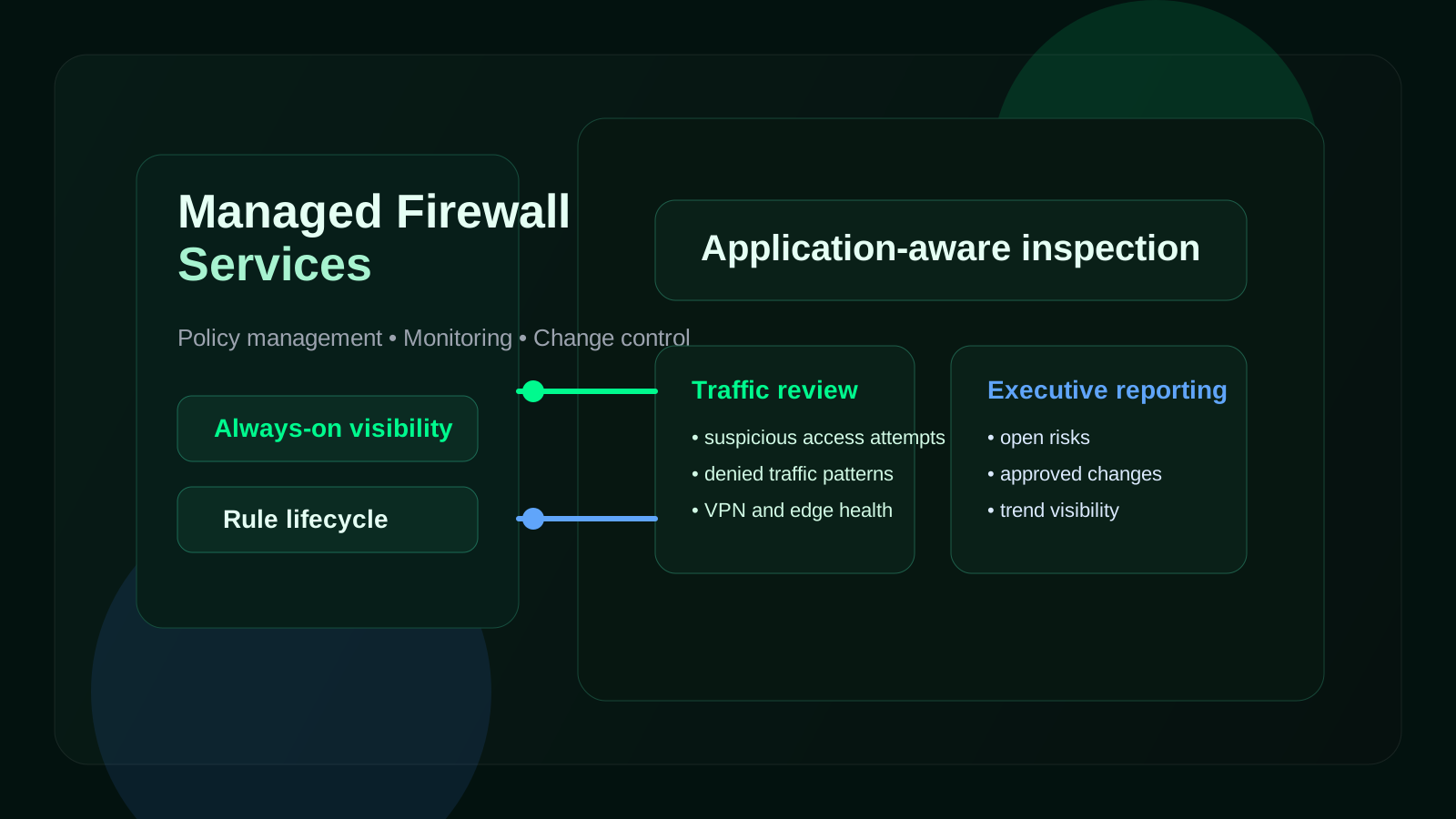
Managed Firewall Services
Datapath helps regulated and multi-site teams manage firewall services across policy, VPN and ZTNA access, segmentation, logging, updates, backups, implementation, reporting, and escalation. The service connects managed firewall security, next-gen firewall managed services, and multi-site firewall management to a broader cybersecurity and IT operating model.
What Datapath Delivers
Datapath reviews firewall rules, stale objects, VPN or ZTNA access, vendor exceptions, NAT exposure, IoT/BAS zones, contractor access, and segmentation assumptions so access decisions stay current and defensible.
Firewall health, logs, blocked traffic patterns, suspicious connections, VPN activity, and urgent events are reviewed with clear handoff paths to internal IT, MDR, vendors, or incident response.
Datapath supports managed firewall implementation, firmware planning, high-availability checks, configuration backups, change windows, rollback planning, licensing review, and lifecycle roadmap decisions.
Buyer Questions
Use the search phrase behind the research to decide whether your team needs a provider comparison, recurring firewall operations, next-gen firewall support, or multi-site governance.
Recurring firewall operations with clear ownership for policy, monitoring, updates, remote access, reporting, and emergency response.
Datapath manages firewall services as an accountable operating model, not just appliance administration.
A provider-led way to keep firewall policy, health, logs, VPN access, and risky exceptions governed over time.
Datapath reviews rules, access paths, firmware, backups, logging, and escalation so the firewall stays aligned with business risk.
Support across multiple firewalls, sites, clouds, VPN paths, and segmented networks without unmanaged drift.
Datapath supports multi-site firewall governance, centralized reporting, rollback planning, and consistent policy review.
A single service model for firewall administration, security monitoring, change control, and support escalation.
Datapath defines recurring tasks, approval paths, after-hours response, and evidence that leadership can review.
Security ownership for policy, monitoring, VPN access, log review, and escalation instead of basic firewall administration.
Datapath operates managed firewall security as part of a broader cybersecurity program with reporting and response handoffs.
A provider that can take over recurring firewall operations and define who owns changes, updates, backups, and alerts.
Datapath documents responsibilities, change workflows, emergency authority, and recurring review expectations before management begins.
A service-level comparison that includes security monitoring, rule governance, compliance evidence, and accountable response.
Datapath combines rule cleanup, VPN/ZTNA governance, monitoring, firmware planning, and executive-ready reporting.
A way to compare platform, operating model, implementation support, and reporting before selecting a firewall provider.
Datapath helps evaluate firewall solution fit while keeping attention on policy governance, monitoring, access control, and lifecycle ownership.
Firewall support that connects to everyday IT operations, user access, vendors, branches, cloud networks, and help desk escalation.
Datapath aligns firewall operations with managed IT, cybersecurity, identity, endpoint, backup, and compliance priorities.
Firewall policy needs to coordinate with VLANs, trunks, branch switching, routing, wireless, and segmentation.
Datapath aligns firewall rules with switching, routing, site connectivity, VPN/ZTNA access, logging, and rollback planning so policy changes do not break the user path.
A combined operating model for network access, switching, firewall security, VPN/ZTNA, monitoring, and escalation.
Datapath coordinates network and firewall responsibilities across managed IT, cybersecurity, segmentation, access control, alert review, and executive reporting.
A provider-operated firewall model with scope, ownership, recurring review, updates, monitoring, and evidence.
Datapath treats managed service firewalls as accountable operations with rule governance, change history, backup validation, escalation, and reporting.
A plain-English operating model for firewall management before comparing providers.
Datapath manages the cycle from baseline inventory to policy review, monitoring, maintenance, escalation, and leadership reporting.
A simple definition of what is actually managed and why the service matters.
Datapath defines managed firewall around accountable ownership for policy, security monitoring, maintenance, change control, and response handoff.
A plain-English explanation of what a provider should own beyond the firewall appliance or platform.
Datapath defines provider ownership across policy, monitoring, maintenance, implementation, reporting, and incident handoff.
Provider selection criteria for recurring firewall ownership, rule review, monitoring, implementation, and response authority.
Datapath gives buyers a service model that defines who owns policy, health checks, changes, escalation, and leadership reporting.
Help planning and executing firewall changes without breaking access, site connectivity, compliance evidence, or rollback readiness.
Datapath supports discovery, configuration review, maintenance windows, rollback planning, post-cutover validation, and documentation.
A local managed firewall provider for Fresno teams that still need mature security operations and accountable reporting.
Datapath serves Fresno and Central Valley organizations with managed firewall services tied to managed IT, cybersecurity, and compliance workflows.
A platform-plus-service model where firewall tools are operated with repeatable governance and security outcomes.
Datapath supports platform decisions while keeping the operating model focused on access control, monitoring, and risk reduction.
Support for NGFW capabilities such as application-aware policy, threat prevention, segmentation, and remote-access control.
Datapath helps turn next-generation firewall features into reviewed rules, maintained configurations, and actionable reports.
A way to compare firewall platforms and providers across branch offices, cloud edges, VPN paths, and remote users.
Datapath evaluates multi-site coverage, policy consistency, rollback readiness, monitoring gaps, and reporting across locations.
A way to give remote employees application-specific access without exposing broad internal network ranges.
Datapath aligns ZTNA, VPN, identity policy, endpoint posture, firewall rules, logging, and support workflows around least-privilege remote access.
Isolation for cameras, HVAC, badge systems, sensors, printers, classroom devices, or building automation systems that should not reach staff or corporate systems broadly.
Datapath maps IoT and BAS devices, defines allowed traffic, restricts management paths, and monitors attempts to cross segment boundaries.
Controls that separate privileged access, patching paths, management tools, and high-value application tiers across mixed operating systems.
Datapath builds segmentation policy around users, devices, services, admin paths, logging, and business need instead of assuming internal network trust.
Contractor access limited to named internal applications, approved support windows, and auditable paths instead of broad VPN access.
Datapath designs contractor access paths with identity-aware policy, ZTNA or firewall enforcement, expiration, logging, and escalation ownership.
Consistent access policy across on-premise, cloud firewalls, private applications, SaaS, and remote users.
Datapath connects cloud segmentation, firewall governance, identity groups, private application access, and reporting into one operating model.
Operating Model
Datapath combines always-on monitoring, technician accountability, and strategic planning so IT does not depend on heroics or disconnected vendors.
Document firewalls, HA pairs, cloud firewalls, VPNs, tunnels, NAT rules, exposed services, admin access, firmware, backups, and logging paths.
Review broad allow rules, stale objects, vendor access, remote-access exceptions, contractor paths, IoT/BAS segmentation gaps, and risky internet-facing exposure.
Set approval rules, emergency-change authority, after-hours escalation, MDR handoff, rollback steps, and incident communication expectations.
Give leadership a recurring view of rule changes, open risk, patch or firmware status, access exceptions, monitoring findings, and roadmap priorities.
Best Fit
Healthcare, finance, K-12, government, and contractor teams get firewall evidence, remote-access control, and change history that support audit and insurance reviews.
Offices, clinics, campuses, branches, warehouses, and cloud networks can standardize policy, segmentation, site-to-site tunnels, and escalation across locations.
Internal teams keep business context while Datapath adds firewall operations depth, monitoring discipline, policy cleanup, and executive-ready reporting.
Related Pages
FAQ
Managed firewall security is the ongoing operation of firewall controls for risk reduction. It includes policy review, rule changes, monitoring, VPN or ZTNA governance, firmware planning, backups, reporting, and escalation.
Yes. Datapath provides managed firewall security services for regulated and mid-market teams that need policy governance, monitoring, remote-access control, maintenance planning, reporting, and incident handoff.
A managed firewall is a firewall environment operated by a provider or accountable service team. The work usually includes policy management, monitoring, updates, backups, VPN or ZTNA access, reporting, and response escalation.
Managed firewall services are recurring firewall operations delivered by an outside provider. Datapath can manage policy, rule changes, monitoring, VPN or ZTNA access, firmware planning, configuration backups, reporting, and escalation.
Managed firewall service providers are outside partners that operate firewall environments for businesses. The provider should define ownership for policy, rule changes, monitoring, updates, backups, reporting, emergency changes, and response escalation.
A managed firewall works by combining firewall policy enforcement with a recurring service model. The provider baselines the environment, reviews rules, processes changes, monitors health and security events, plans updates, validates backups, escalates urgent findings, and reports the results.
Managed firewall means a firewall environment has an accountable operating owner for policy governance, monitoring, change control, maintenance, response handoff, and reporting. The firewall may be physical, virtual, cloud-native, or next-generation.
Yes. Datapath can coordinate firewall policy with VLANs, trunks, routes, branch switching, wireless networks, VPN or ZTNA access, site-to-site paths, and segmentation so firewall changes match the real network.
Managed network and firewall services combine firewall operations with the network paths that make policy effective, including switching, VLANs, routing, VPN or ZTNA access, wireless, cloud connectivity, logging, and escalation.
Managed service firewalls are firewall environments operated through a managed service model. Buyers should confirm scope, ownership, rule review, monitoring, updates, backups, reporting, and escalation authority before choosing a provider.
A serious managed firewall service should include rule governance, change control, policy review, stale-object cleanup, VPN and vendor-access review, log monitoring, firmware planning, backup validation, response handoff, and leadership reporting.
Firewall management services often refer to administration, rule changes, updates, and backups. Managed firewall services should include those tasks plus monitoring, policy review, reporting, escalation, and accountability for how firewall risk is reduced over time.
Choose a managed firewall provider by asking who owns policy review, alert triage, emergency changes, firmware planning, configuration backups, VPN access, segmentation decisions, and executive reporting. The provider should prove the operating model before discussing platform preference.
Yes. Datapath supports Fresno and Central Valley organizations with managed firewall services connected to managed IT, cybersecurity, incident response, and compliance evidence.
Yes. Managed firewall services focus on network access policy and firewall operations. Managed cybersecurity is broader and can include endpoint, identity, email, cloud, vulnerability remediation, incident response, and compliance evidence.
Yes. Datapath can support next-gen firewall managed services such as application-aware policy review, segmentation, threat-prevention tuning, VPN or ZTNA governance, firmware planning, logging, change control, and escalation across supported firewall environments.
They can. Datapath can support multi-site firewall management across offices, clinics, campuses, branches, warehouses, cloud networks, VPN paths, and remote users so policy and reporting stay consistent.
Yes. Datapath can help define remote-work segmentation across ZTNA, VPN policy, identity groups, endpoint posture checks, managed firewall rules, logging, and escalation so remote users receive application-specific access instead of broad network reach.
IoT and building automation systems should be inventoried, placed in limited-function zones, allowed only required traffic, restricted from ordinary management paths, and monitored for attempts to reach staff, corporate, resident, student, or critical system networks.
Yes. Datapath can design contractor access with identity-aware policy, ZTNA or firewall enforcement, named applications, approved support windows, logging, expiration dates, and clear ownership for exceptions.
Yes. Datapath can help segment privileged administration, authentication services, patching paths, monitoring tools, backup connectivity, and high-value application tiers across mixed Windows and Linux environments.
Yes. Datapath helps organize firewall evidence such as rule-change history, access approvals, segmentation decisions, logging status, firmware review, exceptions, and remediation ownership for regulated and insurance-driven reviews.
Managed firewall implementation can be included or scoped as a project. Datapath can support discovery, migration planning, maintenance windows, rollback planning, post-cutover validation, documentation, and lifecycle roadmap decisions.
Service Area
Datapath supports regulated organizations across California and Central Ohio with local presence and accountable managed services.

Book a free, no-obligation consultation with our team to explore how Datapath can support your business.