GLBA Risk Assessment Support
Datapath helps identify customer information, systems, users, vendors, threats, safeguards, open control gaps, remediation owners, and reassessment triggers so the written risk assessment reflects the real environment.
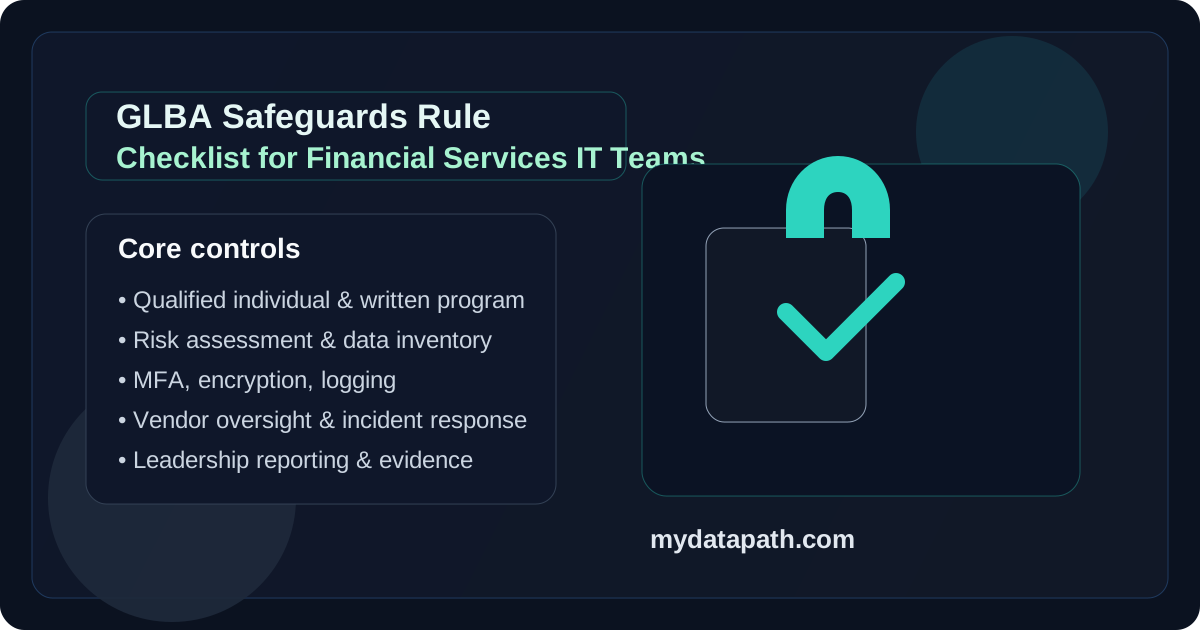
GLBA Compliance Services
Datapath helps covered financial institutions and finance-adjacent teams translate GLBA Safeguards Rule requirements into operating evidence across risk assessment, customer-information scope, MFA, encryption, service provider oversight, incident response, backup readiness, remediation, and leadership reporting.
What Datapath Delivers
Datapath helps identify customer information, systems, users, vendors, threats, safeguards, open control gaps, remediation owners, and reassessment triggers so the written risk assessment reflects the real environment.
Controls move from checklist language into accountable work across MFA, least privilege, encryption, endpoint coverage, logging, Microsoft 365, backup validation, vulnerability remediation, and exception tracking.
Datapath helps financial teams review customer-information handling across Microsoft 365, file shares, secure transfer tools, vendor portals, backups, retention, disposal, access logs, and exception evidence.
Datapath helps review provider access, admin paths, contract assumptions, remote support tools, backup and incident handoffs, security evidence, and recurring oversight records for vendors that affect customer information.
Financial teams get practical response roles, escalation paths, containment workflow, vendor coordination, evidence preservation, backup-readiness checks, and post-incident remediation tracking before pressure arrives.
Buyer Questions
Current GSC demand clusters around GLBA checklists, risk assessment, audit evidence, service provider oversight, and incident response. Datapath maps each search intent to the operating evidence and remediation work behind it.
A practical checklist that moves beyond policy language into scope, owners, controls, evidence, and remediation.
Datapath helps financial teams connect the checklist to customer-information inventory, MFA, encryption, vendor oversight, incident response, backup readiness, and reporting.
A way to verify whether the written information security program has real operating proof behind each control area.
Datapath maps Safeguards Rule control areas to current systems, users, vendors, gaps, tickets, exceptions, and leadership evidence.
A checklist that translates official Safeguards Rule requirements into owners, controls, evidence, and remediation work.
Datapath maps the written program, risk assessment, access controls, MFA, encryption, logging, disposal, vendor oversight, incident response, and reporting into operating evidence.
A written assessment that identifies customer information, systems, users, vendors, threats, safeguards, likelihood, impact, and control gaps.
Datapath supports technical scoping, identity and endpoint posture review, Microsoft 365 and cloud checks, vendor access review, backup evidence, and remediation tracking.
A risk assessment that is specific enough to connect threats, controls, owners, evidence, and reassessment triggers.
Datapath helps inventory customer-information systems, access paths, vendors, safeguards, likelihood and impact assumptions, open gaps, and remediation owners.
Evidence that can survive scrutiny from leadership, regulators, customer diligence, cyber insurance, or an incident review.
Datapath organizes access reviews, MFA coverage, logging, backup tests, vendor evidence, response records, vulnerability status, and exception decisions into a usable evidence path.
A review-ready evidence index for governance, customer information, access, encryption, monitoring, vendors, response, backups, exceptions, and remediation.
Datapath turns checklist items into evidence locations, named owners, exception decisions, remediation trackers, and leadership-ready reporting.
Controls for paper records, scanned files, Microsoft 365 sharing, file shares, secure portals, vendor platforms, backups, retention, and disposal.
Datapath reviews document-handling workflows, secure transfer methods, access logs, retention settings, disposal evidence, vendor portals, and escalation paths.
Operational support for the person or team overseeing the written information security program.
Datapath supports the technical evidence, remediation workflow, vendor oversight, response readiness, and reporting cadence around the Qualified Individual.
A repeatable way to identify providers, review safeguards, limit access, require accountability, and reassess risk over time.
Datapath reviews provider access paths, admin roles, remote tools, MFA expectations, incident-notification handoffs, backup responsibilities, and recurring oversight evidence.
A vendor-management routine that proves which providers touch customer information, what safeguards apply, how access is limited, and when evidence is reviewed.
Datapath maps vendor access, remote support, contract assumptions, incident-notification paths, security evidence, and recurring reassessment into an owned oversight cadence.
A response plan with roles, escalation paths, containment steps, evidence handling, communication paths, and recovery priorities.
Datapath helps define technical response workflow, alert validation, containment coordination, vendor handoffs, backup status, executive notes, and remediation follow-through.
Help operating the technical safeguards and evidence routines behind the written program.
Datapath connects cybersecurity operations, managed IT, vendor coordination, incident readiness, backup validation, and executive reporting into one accountability rhythm.
Operating Model
Datapath combines always-on monitoring, technician accountability, and strategic planning so IT does not depend on heroics or disconnected vendors.
Confirm covered systems, customer information, vendors, business processes, privileged users, and the owners who need to review risk and evidence.
Review MFA, access control, encryption, logging, endpoint protection, backup readiness, cloud configuration, disposal, change management, and vendor access.
Move findings into prioritized remediation with owners, due dates, implementation notes, exception decisions, and leadership escalation when risk needs sponsorship.
Keep recurring proof around access reviews, vendor oversight, incident response, backup tests, vulnerabilities, accepted risk, and executive reporting.
Best Fit
Lenders, finance companies, accounting and tax firms, advisory practices, and other covered environments can organize safeguards around real IT ownership.
Small teams can turn GLBA requirements into a manageable operating cadence for evidence, control review, remediation, and vendor follow-through.
Teams supporting financial customers can strengthen customer-information safeguards, vendor evidence, cyber-insurance readiness, and diligence responses.
Related Pages
FAQ
GLBA compliance services help covered financial institutions translate Safeguards Rule obligations into practical security operations, including risk assessment, customer-information inventory, MFA, encryption, vendor oversight, incident response, evidence management, and remediation tracking.
Yes. Datapath helps map Safeguards Rule checklist items to technical owners, systems, users, vendors, access controls, MFA, encryption, logging, disposal, service provider oversight, incident response, backup readiness, evidence, and remediation work.
Datapath supports the technical and operational portions of a GLBA risk assessment by reviewing systems, users, vendors, safeguards, open control gaps, backup readiness, and remediation ownership. Legal interpretation should remain with qualified counsel or compliance advisers.
Yes. Datapath can help identify customer-information systems, access paths, vendors, foreseeable threats, safeguards, likelihood and impact assumptions, control gaps, reassessment triggers, and remediation owners for the technical portion of the assessment.
Yes. Datapath can organize evidence for governance, customer-information inventory, access reviews, MFA, encryption, logging, secure disposal, service provider oversight, incident response, backup readiness, vulnerability remediation, exceptions, and leadership reporting.
Yes. Datapath can review Microsoft 365 sharing, file shares, secure portals, secure financial data transfer, vendor platforms, backups, retention, disposal, access logs, and escalation paths that involve customer information.
Datapath can support the technical evidence, remediation, vendor oversight, incident response readiness, reporting, and control-operation work around the Qualified Individual. Formal legal interpretation and regulator-facing decisions should remain with qualified counsel or compliance advisers.
Datapath helps financial teams review provider access paths, administrator roles, remote support tools, MFA expectations, backup and incident handoffs, security evidence, contract assumptions, and recurring oversight records.
Yes. Datapath helps define response roles, escalation paths, alert triage, containment coordination, evidence preservation, vendor communication, backup readiness, executive notes, and remediation tracking.
Yes. Datapath can review MFA coverage, privileged access, endpoint encryption, data transmission paths, Microsoft 365 controls, cloud storage, compensating controls, and exception evidence.
No. Datapath helps operate, remediate, and organize technical evidence. Formal legal interpretation, audit opinions, and regulator-facing decisions may require qualified counsel, auditors, or compliance advisers.
Service Area
Datapath supports regulated organizations across California and Central Ohio with local presence and accountable managed services.

Book a free, no-obligation consultation with our team to explore how Datapath can support your business.