Exit and Handoff Planning
Datapath helps identify what must be exported, transferred, documented, retired, overlapped, or validated before ending an IT provider relationship.
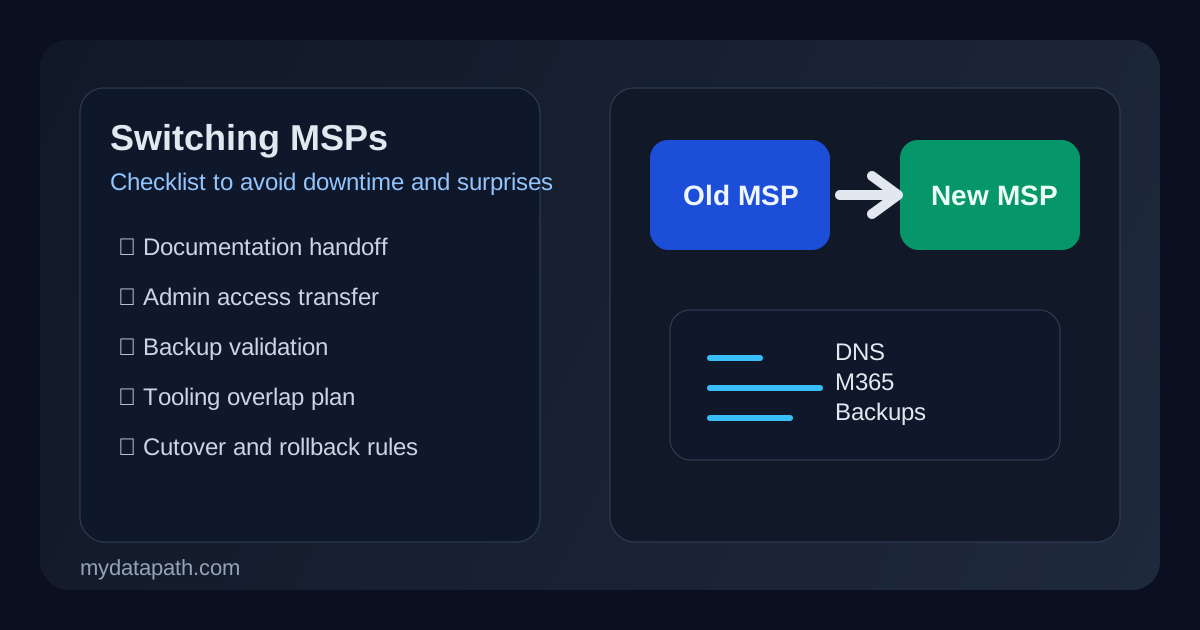
Managed IT Transition Services
Datapath helps regulated and mid-market organizations plan MSP transitions, vendor exit strategies, new-provider onboarding, documentation handoff, privileged-access transfer, backup validation, tool overlap, and first-30-day stabilization so changing IT providers does not create downtime, security gaps, or lost operating knowledge.
What Datapath Delivers
Datapath helps identify what must be exported, transferred, documented, retired, overlapped, or validated before ending an IT provider relationship.
We review privileged access, Microsoft 365 roles, RMM or endpoint tooling, firewall and backup ownership, backup-vendor migration risk, DNS, vendors, and recovery evidence so transition risk is visible.
The incoming operating model gets a first-30-day plan for support routing, documentation, inherited risks, escalation rules, security baselines, reporting, and executive visibility.
Buyer Questions
Current search data shows Datapath already visible for vendor exit strategy, vendor offboarding, contract exit terms, switching MSP, MSP transition, and provider handoff questions. This service turns that research into a controlled provider-change plan.
A practical plan for data return, access removal, documentation handoff, continuity controls, fees, and verification before a vendor relationship ends.
Datapath turns the checklist into an operating transition plan with owners, evidence, sequencing, and successor-provider cooperation.
Guidance on how to offboard vendors without leaving accounts, tools, ticket history, data, or privileged access behind.
Datapath reviews vendor access, exports, documentation, remote tools, service accounts, integrations, and final evidence before closure.
A practical template with owners, timing, evidence, dependencies, transition assistance, fees, and final verification before a contract ends.
Datapath can convert the template into a provider-change plan that assigns owners for access, data, documentation, backup, vendors, user communication, and cutover risk.
Hands-on help turning a contract exit checklist into a controlled offboarding and transition workflow.
Datapath supports transition discovery, documentation handoff, privileged-access transfer, cloud and repository access review, backup validation, and first-month stabilization.
A technical handoff plan for repositories, code ownership, cloud IAM, CI/CD tokens, certificates, service accounts, billing roles, and admin portals.
Datapath helps inventory, transfer, rotate, and verify access across Microsoft 365, cloud tenants, repositories, endpoint tools, backup platforms, vendors, and documentation systems.
A safer way to change IT support providers without downtime, support gaps, or hidden dependency surprises.
Datapath maps systems, tools, escalation paths, backup ownership, user communication, and first-week support expectations before cutover.
A practical checklist for replacing an IT provider without losing documentation, admin access, vendor context, backup visibility, or support continuity.
Datapath turns the checklist into a transition plan with system ownership, access transfer, documentation review, tool overlap, backup validation, user communication, and access-removal evidence.
A complete provider-change plan that covers discovery, cutover sequencing, outgoing-provider access removal, first-week support routing, and inherited-risk tracking.
Datapath builds a transition plan around owners, milestones, system dependencies, backup restore confidence, escalation paths, and leadership-ready status reporting.
A way to change backup ownership or platforms without creating a recovery gap during the MSP handoff.
Datapath validates backup account ownership, protected workloads, retention settings, Microsoft 365 or SaaS scope, restore tests, alerting, and old-platform retirement timing.
The buyer is unhappy with responsiveness and needs a replacement plan that improves service without creating downtime or access confusion.
Datapath reviews current service gaps, onsite or after-hours needs, ticket routing, vendor ownership, and first-30-day stabilization before the provider change is treated as complete.
A partner to plan and execute the provider change instead of leaving the handoff to informal email threads.
Datapath supports transition discovery, access transfer, documentation review, tool overlap, backup validation, risk cleanup, and first-month reporting.
A structured first 30 days with the new provider so discovery, support routing, and security visibility do not drift.
Datapath establishes documentation, admin access, support channels, security baselines, inherited-risk lists, and leadership reporting.
A list of the credentials, systems, vendors, backups, diagrams, contracts, open projects, and known risks to gather before notice.
Datapath creates the transition inventory and uses it to reduce cutover risk, prioritize validation, and identify missing ownership.
Exit language that protects data portability, transition support, retained records, access removal, and service continuity for critical platforms.
Datapath helps IT, security, and leadership translate technical dependencies into contract-review questions and operational requirements.
A service conversation for replacing or supplementing an MSP while protecting users, systems, and security controls.
Datapath connects transition planning to managed IT services, co-managed IT, cybersecurity, backup, documentation, and executive accountability.
Operating Model
Datapath combines always-on monitoring, technician accountability, and strategic planning so IT does not depend on heroics or disconnected vendors.
Document who controls Microsoft 365, DNS, firewalls, backups, endpoint tools, vendor portals, cloud tenants, password vaults, licensing, and support queues.
Sequence tool overlap, admin access transfer, user communication, blackout windows, escalation paths, backup validation, and outgoing-provider cooperation.
Rotate credentials, remove outgoing-provider access, clean up remote agents, preserve evidence, and verify that data, documentation, and open issues transferred.
Use the first month to validate support routing, inherited risks, backup restore confidence, security alerts, priority users, vendor contacts, and executive reporting.
Best Fit
Organizations replacing an IT provider get a structured transition plan that reduces downtime, lost context, access confusion, and backup uncertainty.
Teams reviewing a managed IT agreement can define exit terms, documentation ownership, transition support, and offboarding evidence before signing.
Healthcare, finance, K-12, government, and multi-location organizations get transition evidence that supports audit, insurance, continuity, and leadership oversight.
Related Pages
FAQ
Managed IT transition services help an organization change IT providers, onboard a new MSP, or exit an existing vendor relationship while preserving documentation, access control, backup visibility, security tooling, service history, and operational continuity.
A switching MSP plan should include system ownership, privileged access transfer, documentation handoff, backup validation, endpoint and RMM tool decisions, Microsoft 365 admin review, vendor coordination, user communication, cutover timing, and outgoing-provider access removal.
Yes. Datapath can help validate backup ownership, protected workloads, retention settings, Microsoft 365 or SaaS recovery scope, restore tests, alerting, tool overlap, and old-platform retirement timing before a backup vendor switch creates a recovery gap.
A useful MSP transition plan includes discovery, system ownership, privileged-access transfer, documentation review, tool-overlap decisions, backup validation, user communication, outgoing-provider access removal, first-week support routing, and inherited-risk tracking.
Yes. Datapath can help leaders identify the operational requirements that should be reflected in a managed IT or technology contract, including data ownership, documentation transfer, transition support, access removal, service continuity, and verification evidence.
Yes. Datapath can help turn a vendor exit checklist into a practical transition workflow with owners, access steps, documentation requirements, backup validation, successor-provider coordination, cutover timing, and evidence that the outgoing provider no longer has privileged access.
Yes. Datapath can help inventory and transition repository ownership, cloud IAM roles, service accounts, API keys, certificates, CI/CD tokens, reseller delegation, admin portals, documentation, and data exports so the outgoing vendor does not retain unnecessary access.
Datapath reduces downtime risk by mapping ownership before cutover, validating backups, preserving escalation paths, defining tool overlap, confirming admin access, sequencing provider access changes, and stabilizing support during the first month.
Sometimes. A short overlap can reduce risk when documentation is incomplete, backup ownership is uncertain, or critical systems need validation. The overlap should still have a clear scope, timeline, authority, and access-removal plan.
Document Microsoft 365 and identity roles, DNS and domain ownership, firewall and network access, backups, endpoint tooling, security platforms, vendor portals, ticket history, open projects, licensing, contracts, runbooks, and known risks before notice when possible.
Yes. MSP onboarding is the intake and stabilization phase of a managed IT transition. It should establish discovery, documentation, access, security baselines, support channels, escalation rules, inherited-risk reporting, and leadership visibility.
Yes. Regulated organizations should treat provider changes as continuity, access-control, and evidence events. Datapath helps preserve audit-relevant records, access history, backup evidence, security visibility, vendor records, and executive reporting during transition.
Timing depends on environment complexity, incumbent cooperation, documentation quality, tool ownership, backup readiness, and business risk. Datapath usually starts by identifying what must be secured or validated before the formal cutover date.
Managed IT services are the recurring operating model. Managed IT transition services focus on the provider-change period: exit planning, handoff, access transfer, documentation, tool overlap, backup validation, and early stabilization.
Service Area
Datapath supports regulated organizations across California and Central Ohio with local presence and accountable managed services.

Book a free, no-obligation consultation with our team to explore how Datapath can support your business.