Financial Data Workflow Review
Datapath maps how client records, tax packages, payment files, audit PBC requests, statements, loan packages, board reports, and investor materials move through the business.
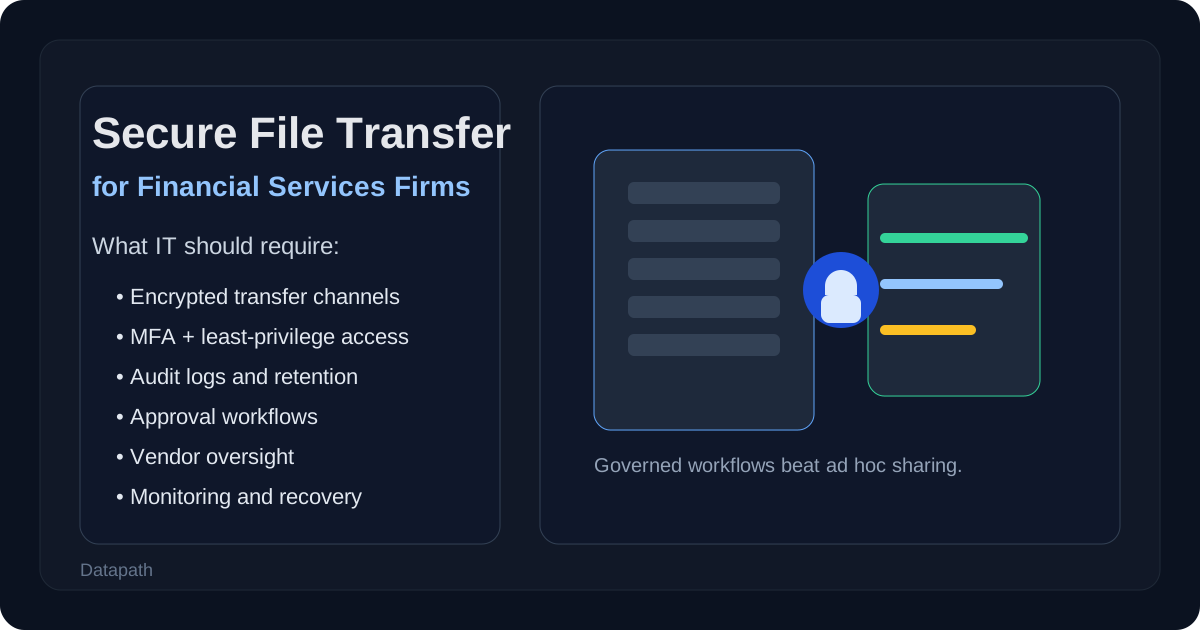
Secure Financial Data Transfer
Datapath helps financial services, fintech, banking, accounting, advisory, lending, and regulated teams review how sensitive files move between employees, clients, auditors, vendors, departments, transaction systems, and external parties. We turn financial services file transfer, financial services file sharing, secure file sending for finance, managed file transfer, secure portals, Microsoft 365 sharing, SFTP, secure forms, audit trails, DLP-adjacent controls, retention, and exception handling into an accountable operating model.
What Datapath Delivers
Datapath maps how client records, tax packages, payment files, audit PBC requests, statements, loan packages, board reports, and investor materials move through the business.
We help compare secure portals, managed file transfer, Microsoft 365 sharing, SFTP, HTTPS delivery, secure forms, vendor portals, and workflow automation against the data and recipient risk.
Transfer controls should show named users, timestamps, recipient actions, approvals, failed attempts, expirations, revocations, administrative changes, exports, and retained evidence.
Datapath reviews MFA, named-user access, privileged roles, external sharing, vendor access, offboarding, access reviews, and exception handling around sensitive financial files.
We help teams define recipient rules, data classification, approval gates, secure form intake, content inspection, alert routing, blocked sharing, and documented overrides.
Secure transfer decisions connect to GLBA, SEC Reg S-P, PCI DSS, SOC 2, cyber insurance, dispute review, legal hold, and incident-response evidence before pressure arrives.
Buyer Questions
Current search demand is not just asking for a tool. Buyers want a defensible way to move regulated financial data, prove what happened, and reduce the risk created by ad hoc sharing.
A governed way to move customer records, transaction files, audit packages, payment data, statements, vendor files, and regulated reports without relying on ad hoc sharing.
Datapath reviews approved methods, transfer ownership, identity rules, logging, retention, monitoring, failure handling, and escalation evidence.
External and internal document sharing that supports client, auditor, vendor, banking, lending, and accounting workflows with clear controls.
Datapath maps sharing workflows to secure portals, Microsoft 365, managed file transfer, SFTP, secure forms, access reviews, expiration, and audit logs.
A practical control model for moving client, payment, audit, tax, loan, vendor, and internal financial data without relying on informal attachments or unmanaged links.
Datapath reviews approved transfer methods, user identity, external access, encryption, audit logs, retention, exceptions, and incident escalation.
Named users, time-bound access, download controls, revocation, malware scanning, audit trails, and retained evidence for sensitive financial documents.
Datapath helps compare secure portals, Microsoft 365 sharing, MFT, SFTP, secure forms, vendor portals, DLP-adjacent controls, and review cadence.
A way to evaluate transfer controls against GLBA, SEC Reg S-P where applicable, PCI DSS for payment data, SOC 2 evidence, vendor oversight, and cyber-insurance expectations.
We map data types, recipient paths, logging, access reviews, vendor workflows, retention, and evidence requirements into a financial-services operating model.
Provider-selection criteria for audit trails that support compliance reviews, incident response, disputes, and leadership reporting.
Datapath checks named-user logs, access events, download records, failed attempts, approvals, expirations, revocations, administrative changes, exports, and retention settings.
A scalable model for mid-market finance teams where users, departments, vendors, auditors, and clients need repeatable transfer rules.
We help define role-based workflows, approved channels, department-level access rules, DLP-adjacent controls, monitoring, training, and review cadence.
A comparison of secure portals, managed file transfer, secure forms, SFTP, HTTPS delivery, Microsoft 365 sharing, and vendor portals.
Datapath compares methods by data sensitivity, recipient type, audit need, automation, resilience, retention, and support ownership.
A practical rule set for sending financial files to clients, auditors, banks, vendors, lenders, and outside advisers without losing access control or evidence.
Datapath helps assign approved methods by data sensitivity, recipient type, approval need, transaction criticality, retention rule, and exception path.
Internal transfer rules for finance, operations, compliance, legal, accounting, treasury, and customer-service workflows.
We review internal permissions, least privilege, shared-drive sprawl, secure forms, approval gates, logging, exception handling, and department owner responsibilities.
Banking and lending transfer controls that align encryption, MFA, access review, retention, audit logging, vendor oversight, incident response, and regulator-ready evidence.
Datapath supports control mapping, file-sharing governance, vendor-access checks, logs, data-flow review, and remediation tracking for financial environments.
Controls for customer records, statements, payment files, loan packages, regulator requests, and third-party exchanges.
Datapath reviews MFA, access reviews, audit logging, transfer failure handling, retention, vendor access, and incident evidence around banking data flows.
A decision model for user-driven secure sharing versus automated managed file transfer, including who owns approvals, monitoring, and exceptions.
Datapath separates one-time sharing from recurring automated transfers, then documents owners, failure alerts, retry handling, reconciliation, and evidence exports.
A method comparison based on data sensitivity, recipient type, transaction criticality, audit need, automation, and retention.
Datapath helps compare secure portals, MFT, SFTP, secure forms, Microsoft 365 sharing, vendor portals, and workflow automation against real finance operations.
A high-volume transfer platform review that accounts for automation, queueing, duplicate prevention, failed-transfer alerts, retry handling, reconciliation, and audit exports.
Datapath reviews transaction workflow risk, platform logging, support ownership, retention, SIEM or alert routing, incident handling, and leadership-ready reporting.
Evidence that can be exported, retained, reviewed, and explained during an audit, dispute, incident, or customer-diligence request.
We evaluate log fields, tamper resistance, retention, SIEM or alert routing, exportability, admin-change tracking, and leadership-ready reporting.
Rules that classify data, enforce recipients, trigger approvals, inspect content, route secure forms, and document exceptions across multiple channels.
Datapath helps define policy requirements, workflow owners, alert routes, exceptions, evidence folders, and recurring review responsibilities.
Operating Model
Datapath combines always-on monitoring, technician accountability, and strategic planning so IT does not depend on heroics or disconnected vendors.
Document sensitive data types, senders, recipients, vendors, departments, applications, transfer methods, current exceptions, and evidence gaps.
Separate which data belongs in secure portals, managed file transfer, Microsoft 365 sharing, SFTP, secure forms, vendor portals, or other governed channels.
Align MFA, named users, external sharing, role permissions, expirations, revocation, audit logs, DLP-adjacent controls, alerts, and retention.
Track access reviews, vendor changes, exceptions, failed transfers, unusual download activity, incident evidence, remediation owners, and leadership reporting.
Best Fit
Teams moving customer records, transaction files, investor reports, API exports, vendor files, and customer-diligence evidence get secure transfer controls tied to daily operations.
Tax packages, payroll files, month-end close, audit PBC requests, client statements, and outside-advisor exchanges can be governed without slowing the business down.
Transfer controls can support customer-information safeguards, supervisory evidence, vendor access, incident response, retention, and exam-ready reporting.
Related Pages
FAQ
Secure financial data transfer services help organizations review, govern, monitor, and document how sensitive financial files move between employees, clients, vendors, auditors, departments, systems, and external parties.
Yes. Datapath reviews financial services file transfer and file sharing workflows across secure portals, Microsoft 365, managed file transfer, SFTP, secure forms, vendor portals, banking exchanges, accounting packages, audit requests, access rules, logs, retention, and evidence ownership.
Financial services firms share files securely by using approved transfer methods with encryption, identity verification, least privilege, audit logs, retention, expiration, revocation, monitoring, and incident-response evidence.
Datapath can help define requirements and compare secure portals, managed file transfer, Microsoft 365 sharing, SFTP, secure forms, vendor portals, audit logs, retention, and policy controls. Datapath does not replace legal, regulatory, or formal audit advice.
Audit logs should show sender, recipient, upload, release, access, download, failed attempts, approvals, expirations, revocations, administrative changes, source context where available, and evidence exports retained for reviews or investigations.
SFTP can be part of a secure transfer model, but it is not enough by itself. Financial teams usually also need identity controls, access reviews, logging, retention, monitoring, exception handling, and documented operating procedures.
Accounting firms should govern tax packages, payroll files, client statements, month-end close files, audit PBC requests, and outside-advisor exchanges with named users, MFA, expiration, download rules, audit logs, retention, and escalation paths.
Banking teams should handle secure data transfer through approved workflows with MFA, named users, least privilege, encryption, audit logs, retention, vendor access review, failure alerts, and incident-response evidence for customer records, statements, payment files, loan packages, and regulator requests.
Yes. Datapath can help define requirements for high-volume financial transfer workflows, including automation, queueing, retry handling, duplicate prevention, reconciliation, failure alerts, audit exports, retention, vendor support, and incident evidence.
Useful policy engine capabilities include data classification, approved-recipient rules, approval gates, content inspection where appropriate, secure form routing, exception documentation, alert routing, expiration rules, and evidence preservation.
Yes. Secure financial data transfer often supports customer-information safeguards, access controls, vendor oversight, incident-response facts, retention, and recordkeeping expectations. Legal interpretation and reportability decisions should remain with qualified counsel or compliance advisers.
Yes. Datapath can review internal transfer workflows across finance, accounting, compliance, legal, operations, treasury, and support teams, then define access rules, approved methods, logs, approval gates, and owner responsibilities.
Review controls before audits, cyber-insurance renewals, new vendor onboarding, regulatory findings, M&A activity, major Microsoft 365 changes, file-sharing incidents, or any recurring workflow that moves sensitive financial data outside a small trusted group.
Service Area
Datapath supports regulated organizations across California and Central Ohio with local presence and accountable managed services.

Book a free, no-obligation consultation with our team to explore how Datapath can support your business.