PCI Scope and Readiness Review
Datapath maps payment workflows, cardholder data paths, supporting systems, vendors, locations, remote access, shared services, and evidence sources so teams know what PCI work actually belongs in scope.
PCI DSS Compliance Services
Datapath helps finance, retail, healthcare, and multi-site teams reduce PCI scope, validate segmentation, organize evidence, close control gaps, and keep payment-security work accountable.
What Datapath Delivers
Datapath maps payment workflows, cardholder data paths, supporting systems, vendors, locations, remote access, shared services, and evidence sources so teams know what PCI work actually belongs in scope.
Findings move into firewall policy cleanup, network segmentation validation, wireless and remote-access review, MFA, patching, vulnerability remediation, logging, backup assumptions, and vendor-access controls.
Teams get owner calendars, control-to-evidence mapping, stale-evidence cleanup, exception tracking, leadership reporting, and assessor handoff support while formal validation stays with the qualified assessor or program authority.
Buyer Questions
PCI searchers often mix readiness, reporting, network segmentation, financial-institution checklists, stale evidence, and patch-management questions. Datapath maps those signals to the operating work that makes payment security easier to prove.
Proof that the cardholder data environment is isolated by enforceable controls, not just described in a diagram.
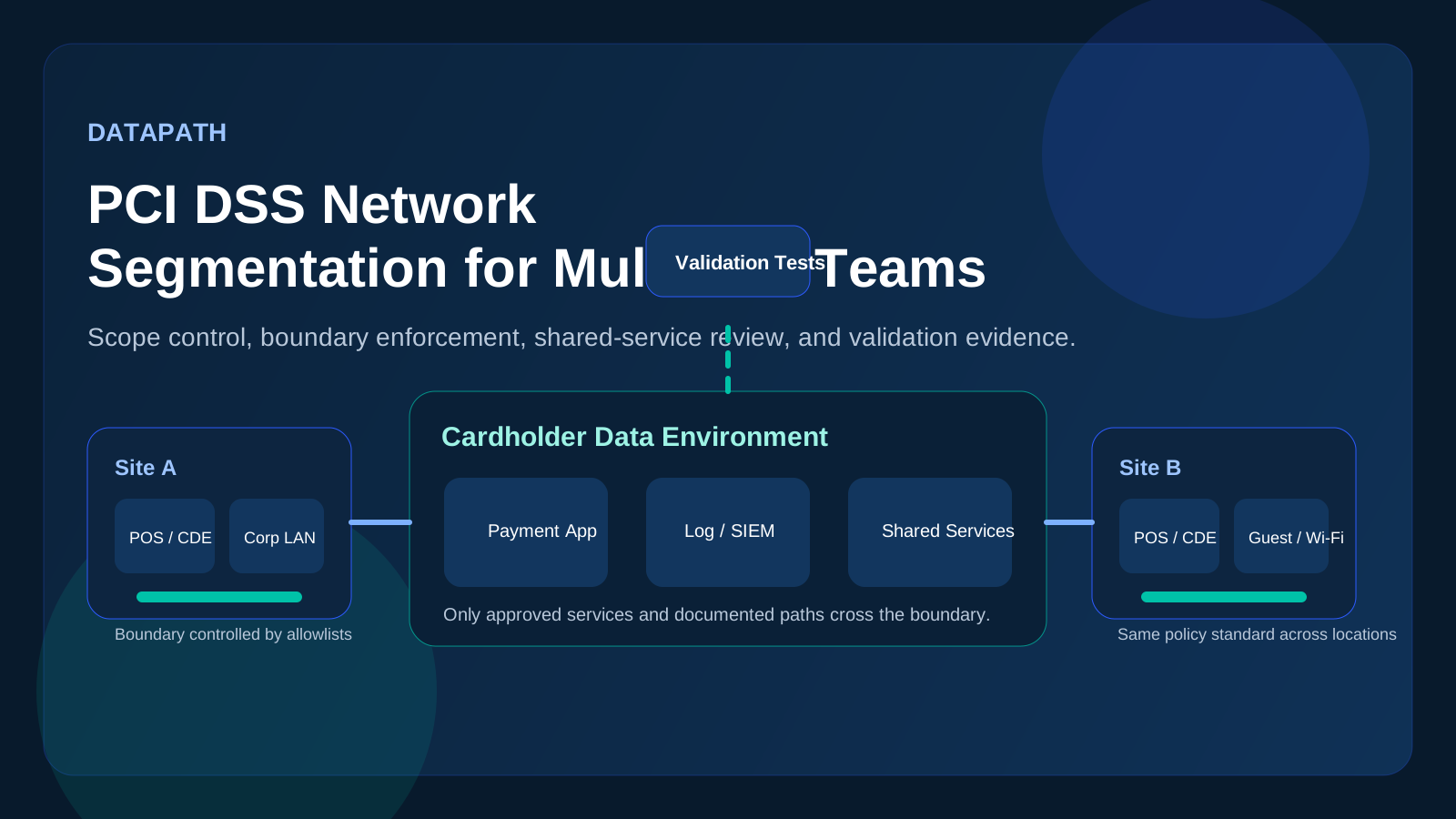
Datapath reviews scope, network paths, firewall policy, shared services, wireless exposure, remote access, change records, and validation evidence that support segmentation decisions.
A provider who can connect payment-scope reporting, wireless controls, segmentation, and evidence into one accountable operating model.
Datapath supports PCI reporting packages, wireless and firewall review, segmentation evidence, remediation tracking, and escalation across MSP, security, and vendor responsibilities.
A responsibility map for hosted, cloud, colocation, or managed data-center environments where customer, provider, vendor, and MSP controls all affect payment scope.
Datapath helps review firewalls, security groups, management paths, shared services, remote access, logs, change records, and segmentation evidence for hosted payment environments.
A consistent store or restaurant model for separating payment systems from guest Wi-Fi, employee Wi-Fi, office devices, cameras, printers, and vendor support.
Datapath helps standardize store firewall rules, wireless boundaries, local exceptions, vendor paths, WIPS evidence, scan remediation, and segmentation validation across locations.
A practical path from payment-scope uncertainty to owned remediation, evidence collection, and assessment preparation.
Readiness work clarifies CDE boundaries, control owners, evidence gaps, scan findings, vendor responsibilities, exception registers, and leadership decisions before validation pressure peaks.
A finance-aware checklist that covers payment workflows, customer data, vendors, vulnerability management, access control, and evidence.
Datapath connects PCI checklist work to financial services cybersecurity, managed IT, patching, firewall governance, backup readiness, and recurring executive reporting.
Control and evidence guidance for banking or finance-adjacent teams that need defensible operating proof.
Datapath helps document access reviews, patch status, scan remediation, vendor files, network segmentation, incident notes, logging coverage, and exception decisions.
A way to find expired, missing, or weak evidence before an assessor, bank, processor, insurer, or customer review does.
Evidence reviews flag stale screenshots, outdated diagrams, unclosed tickets, old vendor attestations, missing approvals, and controls without a recurring owner.
Patching and vulnerability ownership that can support payment security and broader financial-control expectations.
Datapath tracks severity, exposure, remediation owners, exceptions, reporting cadence, and proof of closure across endpoints, servers, network devices, and supported platforms.
Operating Model
Datapath combines always-on monitoring, technician accountability, and strategic planning so IT does not depend on heroics or disconnected vendors.
Identify payment flows, CDE boundaries, connected systems, shared services, third parties, locations, administrative paths, evidence sources, and validation expectations.
Review network diagrams, firewall rules, access paths, wireless exposure, remote support, allowed traffic, and testing evidence that supports reduced-scope decisions.
Prioritize remediation across MFA, patching, vulnerability findings, firewall policy, endpoint coverage, logging, backup readiness, vendor access, and expired exceptions.
Create recurring reviews for access, scans, segmentation tests, change records, vendor files, incident notes, exception registers, and leadership decisions.
Best Fit
Organize PCI DSS evidence around payment workflows, customer information, vendor access, vulnerability remediation, patch management, logging, and leadership-ready control reporting.
Standardize payment networks, firewall rules, wireless controls, store exceptions, vendor support, segmentation testing, and evidence across branches, clinics, offices, or storefronts.
Give small teams a workable PCI operating rhythm when scans, payment vendors, assessors, cyber insurance, and executive questions are exposing gaps faster than the team can close them.
Related Pages
FAQ
PCI DSS compliance services help organizations define payment scope, map cardholder data flows, validate segmentation assumptions, remediate technical gaps, organize evidence, track exceptions, and prepare for assessment or self-assessment activity.
No. Datapath supports readiness, remediation, evidence, reporting, and operating controls. Formal PCI DSS validation may require a Qualified Security Assessor, acquiring bank, payment brand, processor, or other authorized program authority.
PCI DSS network segmentation is the use of enforceable controls that isolate the cardholder data environment from other systems so payment-scope decisions can be validated. Diagrams or VLANs alone are not enough if access paths still allow systems to affect the CDE.
Yes, when it is properly designed, documented, implemented, tested, and maintained. The PCI Security Standards Council explains that segmentation can help reduce the number of systems that require PCI DSS controls, but the isolation has to be verified.
Common evidence includes CDE diagrams, data-flow maps, firewall rules, segmentation test results, access reviews, scan remediation tickets, patch records, vendor attestations, change approvals, logging samples, incident notes, exception registers, and leadership approvals.
They can. Datapath can help connect PCI readiness to patch management, vulnerability remediation, exception tracking, severity reporting, and proof that high-risk findings were assigned and closed.
Yes. Where wireless networks or wireless intrusion prevention expectations are relevant, Datapath can help review wireless exposure, segmentation, monitoring responsibilities, vendor handoffs, evidence, and remediation ownership.
Yes. Datapath can help teams review hosted, cloud, colocation, and managed data-center payment environments by mapping responsibilities, firewall and security-group controls, management paths, shared services, vendor access, logs, change records, and validation evidence.
Yes. Datapath can help store, restaurant, clinic, branch, and multi-location teams isolate payment systems from guest Wi-Fi, employee Wi-Fi, office devices, cameras, printers, IoT devices, vendor tunnels, and general corporate traffic while keeping evidence consistent across locations.
PCI DSS readiness is a focused payment-security path. Cybersecurity compliance services are broader and may include HIPAA, SOC 2, CJIS readiness, CMMC, cyber insurance, customer diligence, and related control evidence.
Service Area
Datapath supports regulated organizations across California and Central Ohio with local presence and accountable managed services.

Book a free, no-obligation consultation with our team to explore how Datapath can support your business.