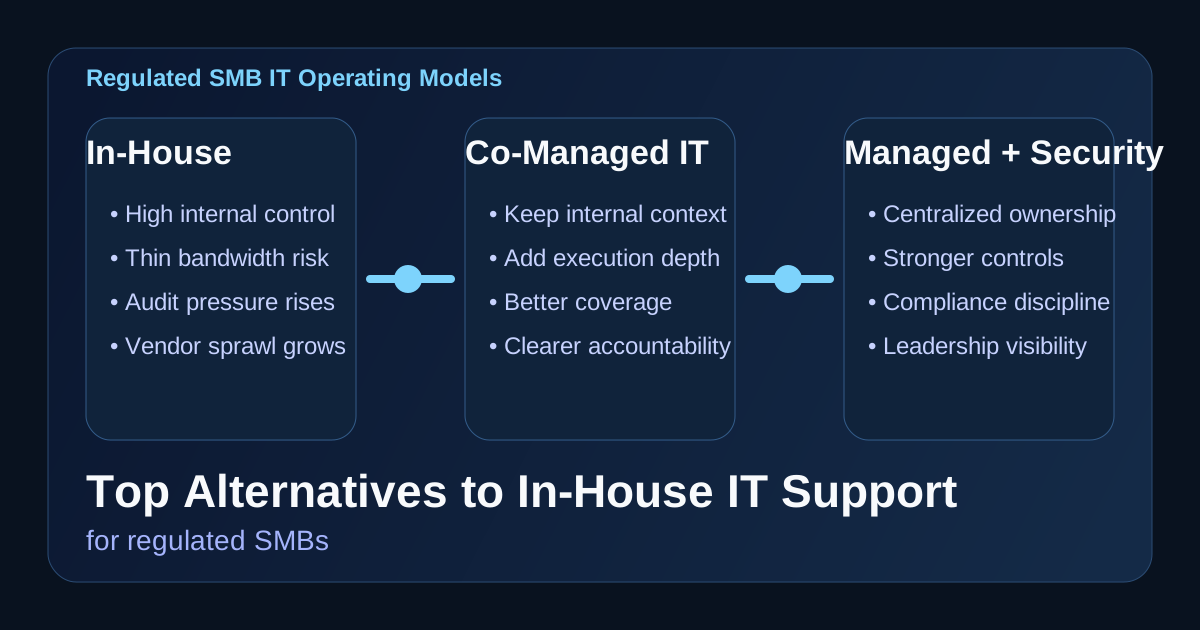
What are the best alternatives to in-house IT support for regulated SMBs?
The best alternatives to in-house IT support for regulated SMBs are usually co-managed IT, fully managed IT, specialized cybersecurity partners, and fractional IT leadership layered onto an existing team. The right answer depends on where the real strain is: day-to-day support, compliance execution, cybersecurity operations, vendor management, or executive planning.123
That matters because many regulated small and mid-sized businesses do not actually have an “IT staffing problem.” They have an accountability problem. One or two internal generalists may be trying to cover tickets, Microsoft 365 administration, vendors, backups, projects, onboarding, security reviews, audit evidence, and leadership reporting at the same time. Work gets done, but not always with enough consistency to satisfy a regulator, insurer, board, or executive team.
In our experience, that is the real reason buyers start exploring alternatives to in-house IT support. They need an operating model that makes technology easier to govern, not just easier to keep alive. For regulated teams, that means stronger documentation, more repeatable controls, better response discipline, and clearer ownership when something breaks or an audit starts.
At Datapath, we think the best comparison is not “internal versus outsourced” in the abstract. It is which model gives your business the right mix of control, coverage, and accountability.
Why do regulated SMBs outgrow a purely in-house model?
Regulated SMBs outgrow a purely in-house model when compliance expectations and operational complexity rise faster than the internal team’s capacity to govern them well. CISA continues to stress basics like multifactor authentication, vulnerability management, secure backups, and administrative control because those fundamentals still drive resilience.1 NIST’s Cybersecurity Framework 2.0 makes the same point from a governance angle: security outcomes depend on coordinated work across governance, protection, detection, response, and recovery.2
A lean internal IT team can absolutely be effective. The issue is that regulated environments usually demand more than technical competence alone. They also require:
- documented procedures and evidence trails
- repeatable access and change controls
- vendor oversight and escalation discipline
- security monitoring and response clarity
- executive-level reporting on risk and priorities
- audit readiness that does not depend on one person remembering everything
Once those expectations pile up, the business starts to feel the cracks. Tickets still close, but recurring issues stay open. Backups may exist, but restore confidence is fuzzy. Security tools may be installed, but nobody is fully certain who reviews alerts, who validates changes, or who owns remediation deadlines.
That is usually the point where in-house IT needs reinforcement rather than more heroics.
Which alternative model fits best?
The best fit usually comes down to whether your business needs more hands, more specialization, or more direction. We recommend comparing alternatives through those three lenses first.
| Model | Best fit | Main strength | Main limitation |
|---|---|---|---|
| Co-managed IT | Internal team is capable but overloaded | Adds execution capacity and process discipline | Still depends on internal leadership quality |
| Fully managed IT | No strong internal IT bench or too much fragmentation | Centralizes support, operations, and accountability | Less day-to-day internal control |
| Specialized cybersecurity partner | Security and compliance risk exceed ops maturity | Improves security depth and control rigor | Does not replace broad IT operations by itself |
| Fractional IT leadership / vCIO | Decisions, roadmap, and governance are the biggest gaps | Improves budgeting, planning, and executive visibility | Needs an ops layer underneath it |
Is co-managed IT the best option when you already have an internal team?
Co-managed IT is often the strongest alternative when your internal team knows the environment well but cannot keep up with support volume, project load, or compliance follow-through. In that model, internal IT keeps strategic context and some control, while the outside partner adds coverage for help desk, endpoint operations, patching, vendor coordination, after-hours escalation, and selected security work.
This tends to work well when the business wants to preserve institutional knowledge without forcing internal staff to live ticket-to-ticket. It is especially useful for teams that need outside help with:
- Microsoft 365 administration and security hardening
- endpoint lifecycle and patching discipline
- backup validation and restore follow-up
- vendor coordination across internet, cloud, and line-of-business systems
- support overflow during growth, turnover, or major projects
If your internal team is good but chronically underwater, co-managed IT can be the least disruptive way to stabilize operations. It also pairs well with broader planning resources like our guide to co-managed IT vs. managed IT and our MSP evaluation framework for 100+ employee organizations.
When does fully managed IT make more sense?
Fully managed IT usually makes more sense when the business needs one operating partner to own support, infrastructure, escalation, and routine control execution end to end. This is common when the internal team is too small, leadership wants cleaner accountability, or technology has become too important to manage through ad hoc coordination.
A good fully managed model should not just answer tickets. It should reduce operational ambiguity by defining who owns:
- end-user support and device lifecycle
- monitoring, patching, and remediation
- backup review and recovery coordination
- cloud administration and identity controls
- recurring issue analysis and follow-through
- quarterly reporting and roadmap inputs
For regulated SMBs, the appeal is not merely outsourcing labor. It is turning IT into a more governable operating function. That is why buyers often compare this route against a broader managed IT services model or local operating support like our Fresno managed IT coverage.
What if the real weakness is cybersecurity, not support?
If the biggest problem is security maturity rather than support capacity, a specialized cybersecurity partner may be the better alternative. Many regulated businesses can keep their core IT support in-house or co-managed while outsourcing higher-discipline security functions such as control review, incident readiness, endpoint oversight, identity governance, and compliance-oriented policy work.
This is often the right move when leadership is asking questions like:
- Are we truly ready for a cyber insurance questionnaire?
- Who reviews privileged access and conditional access changes?
- Are our backups isolated and tested enough for ransomware resilience?
- Could we explain our control posture clearly during an audit or incident?
For those teams, the better alternative is not necessarily “replace IT.” It may be “add a partner with sharper security depth.” CISA’s Cyber Essentials and NIST CSF both reinforce that the basics have to be operationalized, not just purchased.12
When does fractional IT leadership matter most?
Fractional IT leadership matters most when the business keeps making tactical decisions without a clear roadmap, budget logic, or executive-level accountability structure. A vCIO or similar fractional leader can help connect daily IT activity to business priorities, especially in regulated environments where lifecycle planning, vendor sprawl, and compliance deadlines keep colliding.
That model is valuable when leadership needs:
- clearer sequencing of IT and security priorities
- better budgeting for refreshes, cloud spend, and outside services
- stronger vendor governance and contract review
- more decision-ready reporting on risk and open issues
- a roadmap for what to standardize, replace, or defer
If that sounds familiar, our vCIO roadmap template and IT roadmap guidance for regulated businesses are useful benchmarks for what mature planning should look like.
How should regulated SMBs compare alternatives before making a change?
Regulated SMBs should compare alternatives by looking at control coverage, execution discipline, escalation clarity, and leadership visibility rather than just price or headcount. In practice, we recommend evaluating each model against the questions below.
1. Who owns compliance-relevant operational work?
It is not enough for a provider to say they “support compliance.” Ask who actually performs or validates the routine work that auditors and insurers care about: access reviews, patching cadence, backup checks, offboarding discipline, endpoint coverage, and incident escalation documentation.
2. How does the model behave after hours or under pressure?
A calm Tuesday help desk experience tells you very little about what happens during a ransomware scare, an executive mailbox compromise, or an outage touching multiple vendors. Ask how escalation works, who leads coordination, and what communication leadership should expect.
3. What visibility will leadership receive?
The better alternative is usually the one that helps leadership understand priorities, open risks, and unresolved decisions without drowning them in technical noise. If the reporting model is vague, the accountability model probably is too.
4. Does the model fit your regulatory and business environment?
A healthcare group, school environment, financial services firm, and multi-site services company do not all need the same thing. The right partner should be comfortable working in higher-accountability settings, not just general SMB help desk environments.
Why Datapath for regulated SMBs evaluating alternatives to in-house IT?
We think regulated SMBs should choose the model that improves accountability as much as coverage. That means support that reduces recurring friction, security work that actually strengthens resilience, and leadership reporting that helps the business decide what to do next.
Our approach is designed for teams that need more than a generic outsourced help desk. We work with organizations that need IT, cybersecurity, and operating discipline to stay aligned under real-world pressure. That includes businesses comparing co-managed support, fully managed services, compliance-focused security support, and strategic IT leadership options.
If your internal team is stretched thin or your leadership team is losing confidence in how clearly IT risk is being managed, this is usually the right time to reassess the operating model.
Evaluating alternatives to in-house IT support?
We help regulated SMBs compare co-managed IT, managed IT, security operations, and strategic leadership options based on accountability, resilience, and real operating fit.
FAQ: alternatives to in-house IT support for regulated SMBs
What is the best alternative to in-house IT support for a regulated SMB?
The best alternative depends on the gap. Co-managed IT is often best when internal staff are capable but overloaded. Fully managed IT fits better when the business needs centralized ownership. A specialized security partner makes sense when risk and compliance pressure are the main issues.
Is co-managed IT cheaper than hiring more internal staff?
Often, yes. Co-managed IT can give the business broader expertise and better coverage without the full cost of additional salaries, benefits, recruiting, and management overhead. The more important question, though, is whether it improves execution quality and accountability.
Should regulated SMBs outsource cybersecurity separately from IT support?
Sometimes. If the internal or managed IT team handles routine operations well but security maturity is lagging, a separate cybersecurity partner can be the right move. That is common when identity controls, incident readiness, or compliance evidence need more rigor.
When should a business move from in-house IT to fully managed IT?
Usually when technology has become too important, complex, or risky to manage through a thin internal bench alone. Common triggers include recurring operational friction, weak reporting, growing compliance pressure, vendor sprawl, and a lack of clear ownership across support and security.
Sources
- CISA Cyber Essentials
- NIST Cybersecurity Framework 2.0
- Microsoft digital defense and security guidance
- CompTIA research on managed services and SMB IT operations
- Datapath homepage
- Datapath Fresno managed IT page
- Datapath co-managed IT vs. managed IT article
- Datapath vCIO roadmap template