
How do you prepare for an HHS OCR HIPAA audit?
To navigate an HHS Office for Civil Rights (OCR) HIPAA audit, maintain a proactive, evidence-based compliance posture: a current risk analysis, a documented risk management plan, workforce training records, accessible Business Associate Agreements, and reviewed access controls. When OCR requests documentation, it sets a firm deadline, so the evidence has to exist before the letter arrives.12
At Datapath, we believe audit readiness is not a one-time event but a continuous operational discipline. The organizations that handle audits calmly are the ones that already keep their documentation current.
Your HIPAA audit readiness checklist
To prepare your organization, focus on these core areas:
| Focus area | Action item |
|---|---|
| Risk analysis | Conduct and document a comprehensive risk analysis of all systems containing ePHI |
| Risk management | Implement and document a risk management plan that addresses identified vulnerabilities |
| Workforce training | Maintain HIPAA training records, retained for at least six years |
| Business associates | Ensure every vendor with access to ePHI has a signed, current Business Associate Agreement |
| Access control | Review and document user access rights to enforce least privilege |
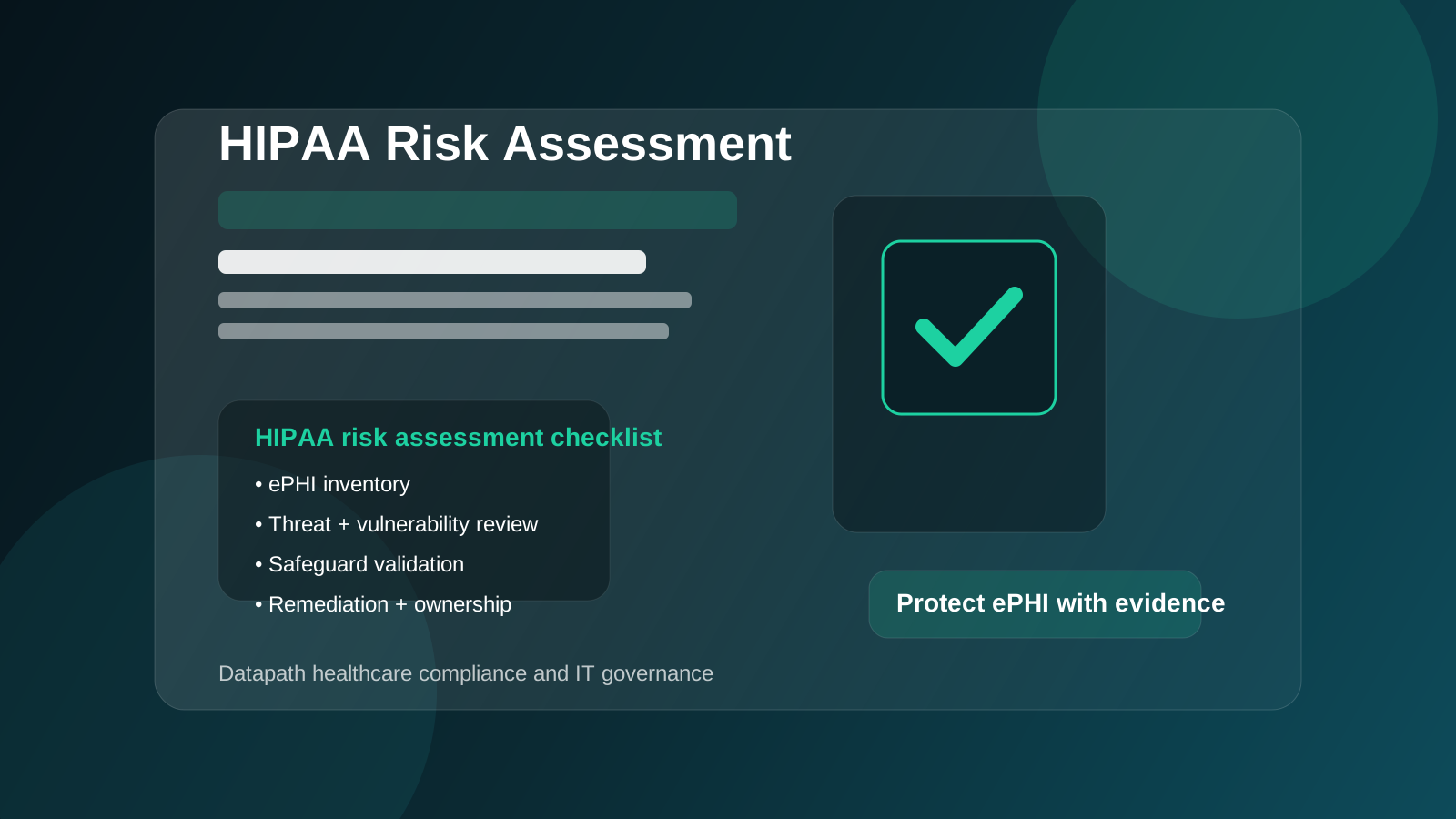
The single most important item is the risk analysis. A thorough, current risk analysis underpins almost everything else, which is why our HIPAA risk assessment checklist for healthcare IT leaders goes deep on how to scope and document it. Because vendors are a frequent gap, pair it with our HIPAA business associate agreement checklist.
Why does documentation matter so much?
HIPAA’s Security Rule requires that policies, procedures, and required actions be documented and retained for six years from creation or from when they were last in effect.2 An audit is, in practice, a documentation exercise: OCR asks you to demonstrate what you do, not just describe it. If a control exists but cannot be evidenced, it is hard to defend during a review. Recovery readiness is part of that picture too, so keep your backup and business continuity plan tested and documented alongside your HIPAA evidence.
Why Datapath for HIPAA audit readiness?
We provide Accountability-as-a-Service™ to help healthcare organizations navigate complex regulatory requirements. We align technology infrastructure with HIPAA through monitoring and proactive security management, and we understand the pressures healthcare providers face across California and Ohio, so compliance work stays documented and audit-ready.
If you want a clearer view of your readiness, explore our cybersecurity services, our managed IT services, and our healthcare solutions. To pressure-test your documentation before OCR does, talk with our team.
FAQ: HHS OCR HIPAA audits
Does OCR provide a warning before an audit?
OCR typically sends a formal notification and sets a deadline for producing documentation. The window is limited, which is why readiness needs to exist before the request arrives.
What is the most common failure point in HIPAA audits?
HHS has long identified an incomplete or missing risk analysis as a frequently cited problem, which is why it should be the first thing you confirm is current.
How long should I keep my training and compliance records?
HIPAA requires documentation to be retained for at least six years from the date of creation or the date it was last in effect, whichever is later.
Are Business Associate Agreements mandatory?
Yes. If a vendor creates, receives, maintains, or transmits protected health information on your behalf, a signed Business Associate Agreement is required under the HIPAA rules.
How can Datapath assist with audit preparation?
We provide ongoing compliance monitoring, risk assessment support, and secure IT management so your documentation stays current, organized, and accessible when a request comes in.