
How do healthcare providers secure telehealth infrastructure?
Securing telehealth infrastructure for healthcare providers requires a comprehensive strategy that combines end-to-end encryption, robust multi-factor authentication, and strict adherence to HIPAA-aligned administrative and technical safeguards. Protecting patient health information (PHI) is both a regulatory obligation and the foundation of patient trust.
As providers rely more heavily on virtual care, the security of the underlying infrastructure becomes a clinical issue, not just an IT one. HHS guidance is clear that HIPAA’s privacy and security protections apply to telehealth, so the controls below should be designed in from the start rather than bolted on later.1
What are the essential steps for telehealth security?
- Implement strong authentication. Ensure every provider and staff member uses unique credentials, and enable multi-factor authentication (MFA) across all access points to block unauthorized entry.
- Enforce encryption in transit and at rest. All video, audio, and data transmissions should be encrypted using current industry-standard protocols.
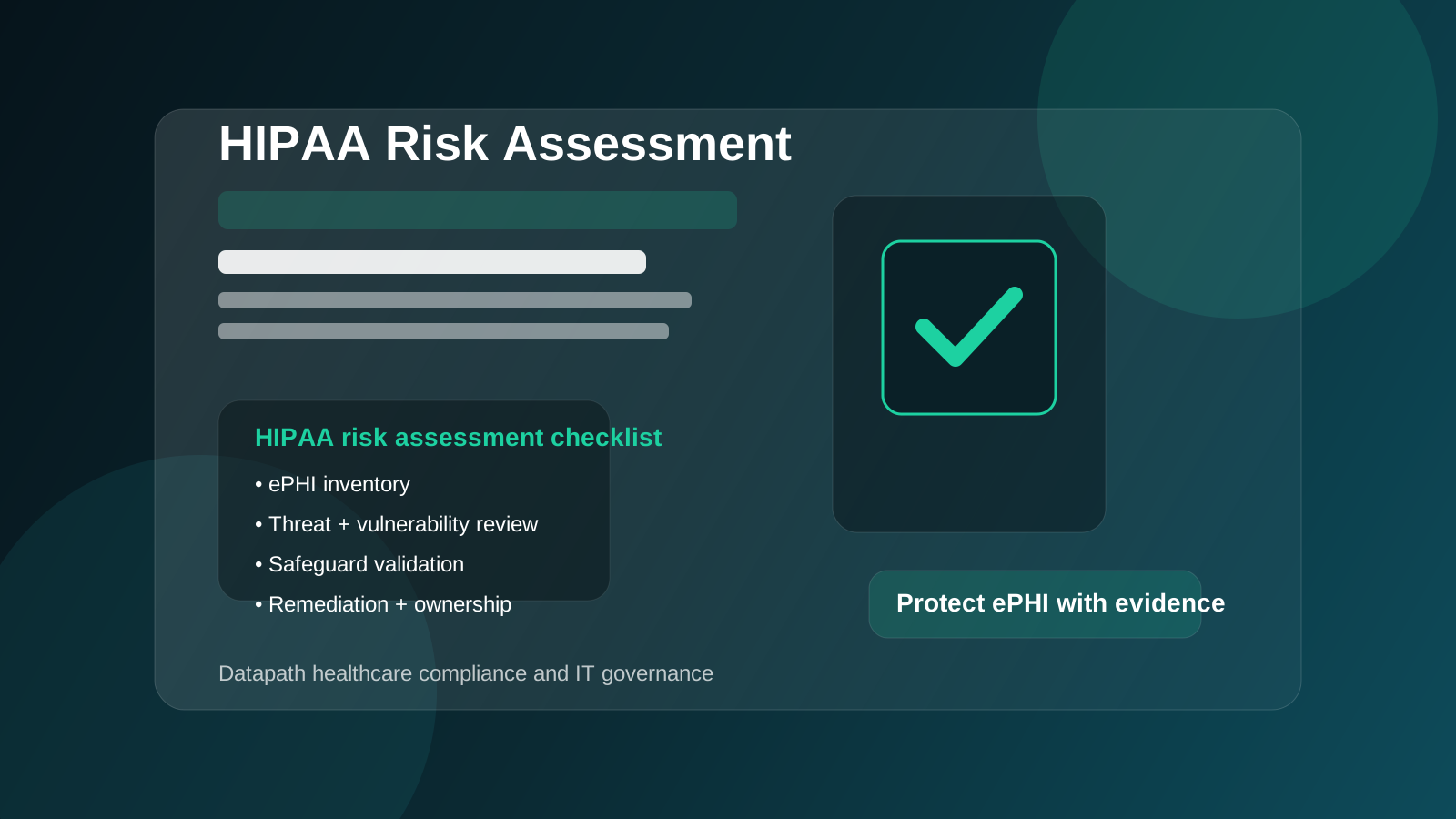
- Conduct regular risk analyses. Periodically assess privacy and security risks and update policies and technical controls based on what you find. Risk analysis is foundational to the HIPAA Security Rule.2
- Establish business associate agreements (BAAs). Only work with vendors willing to sign a BAA, which contractually obligates them to safeguard PHI to HIPAA standards. Any vendor that creates, receives, maintains, or transmits ePHI needs one.2
- Train your team. Provide recurring training on privacy policies, secure communication, and how to recognize and report a potential incident.
What to require from a telehealth platform
| Requirement | Why it matters |
|---|---|
| MFA for all accounts | Stops credential theft from becoming account takeover |
| End-to-end encryption | Protects PHI in transit during video and messaging |
| Signed BAA | Makes the vendor accountable for safeguarding ePHI |
| Access controls / logging | Supports least privilege and audit evidence |
| Documented risk analysis | Keeps controls current as the environment changes |
The identity and remote-access work here overlaps with our guidance on secure remote access for healthcare staff and on what to verify before migrating PHI systems to the cloud. A signed BAA is non-negotiable for telehealth vendors; see our HIPAA business associate agreement checklist.
Why Datapath for telehealth security
We deliver Accountability-as-a-Service™ for healthcare providers across California and Ohio that face real regulatory pressure. We don’t just manage your IT, we align your technology with HIPAA and other healthcare requirements so virtual care stays both secure and dependable. Explore the Datapath homepage, our healthcare solutions, and our cybersecurity services.
Ready to secure your telehealth operations? Talk with our team about your specific needs.
FAQ: securing telehealth infrastructure for healthcare providers
Is HIPAA compliance required for telehealth platforms?
Yes. The enforcement discretion offered during the COVID-19 public health emergency has ended, so providers should use telehealth tools and configurations that meet HIPAA’s privacy and security requirements.
What is a business associate agreement (BAA)?
A BAA is a contract between a healthcare provider and a vendor that handles PHI, requiring the vendor to protect that information in accordance with HIPAA. Telehealth platform vendors that touch ePHI need one.
Can we use standard consumer video conferencing tools for telehealth?
Generally, no. Consumer-grade tools often lack the encryption, access controls, and BAA support needed to meet HIPAA expectations for protecting PHI.
How often should we conduct a risk analysis?
Treat risk analysis as a continuous process. Conduct one initially and revisit it periodically, and any time there are significant changes to technology, vendors, or clinical workflows.
Does Datapath support multi-site healthcare clinics?
Yes. We provide centralized management and secure infrastructure support for multi-site healthcare organizations, with consistent security and performance across all locations.
Sources
- HHS: HIPAA and Telehealth
- Telehealth.HHS.gov: Develop a privacy and security telehealth strategy
- HHS: Summary of the HIPAA Security Rule